First-Time Puppy Owner's Guide: The 2026 Checklist
Bringing home your first puppy? This complete first-time owner's checklist covers gear, feeding, training, vet care and the first 30 days — step by step.
On this page
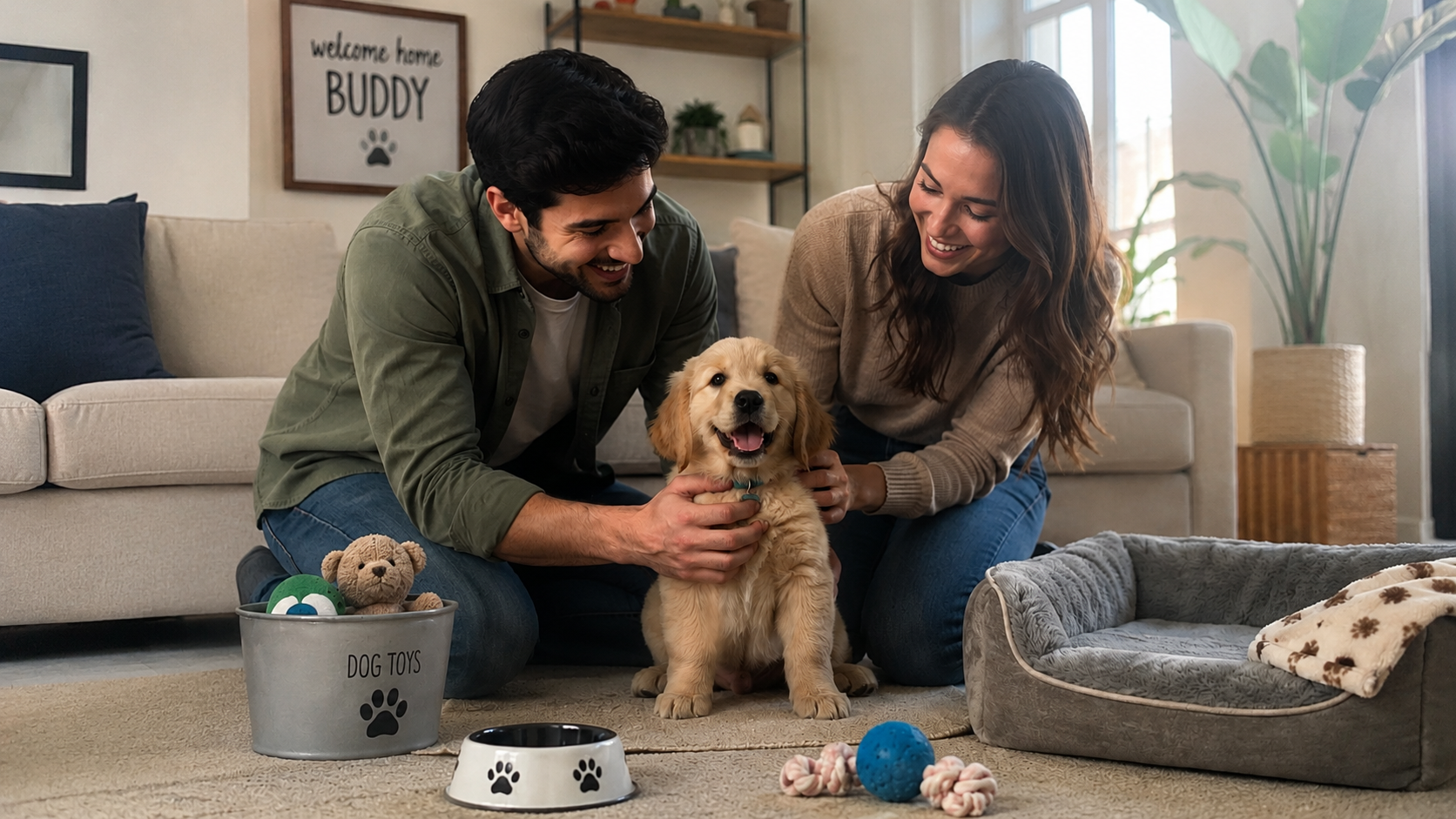
Bringing home your first puppy is equal parts magic and mild panic. One minute you’re melting over tiny paws; the next you’re googling “is it normal for a puppy to cry all night” at 2 a.m. (It is. More on that below.)
This guide is the checklist I wish every first-time owner had: what to buy, what to do in the first 24 hours, how to survive the first month, and the mistakes that make puppyhood harder than it needs to be. Still deciding if a puppy fits your life at all? Start with our honest dog vs cat comparison first.
The golden rule of puppyhood
Puppies don’t need perfect owners — they need consistent ones. Same rules, same words, same routine, every single day. Consistency beats talent, gadgets and even treats.
Before pickup day: your shopping checklist
Buy these before the puppy arrives — you will not want to shop with a confused baby dog in the house:
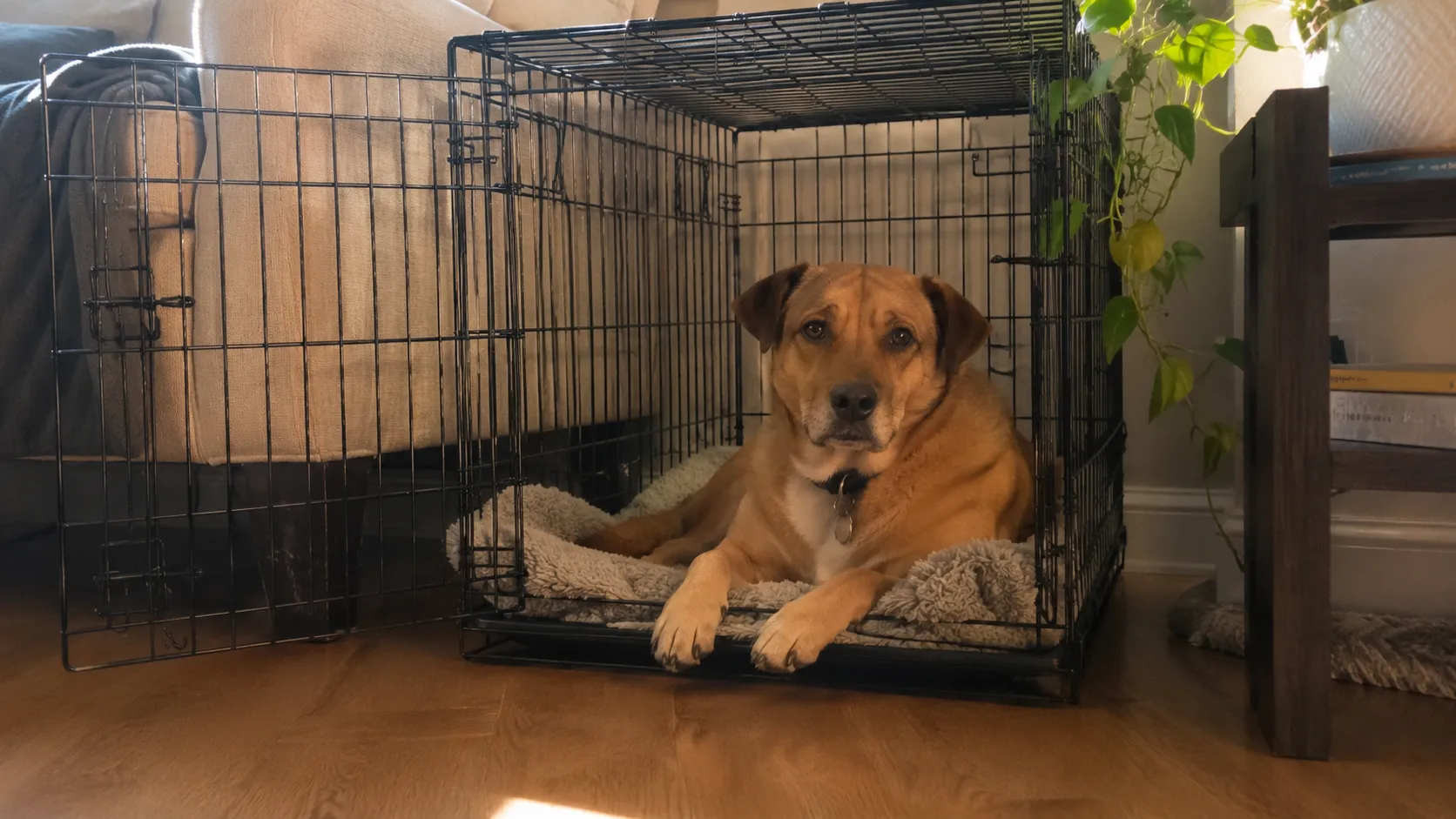
- Crate — the single most useful item you’ll buy. Size it for your puppy now (or buy an adult-size crate with a divider). Our crate training guide explains exactly how to use it.
- Bed + blanket — washable. Trust me: washable.
- Food and water bowls — stainless steel or ceramic beat plastic (easier to clean, no chewing damage).
- Puppy food — start with whatever the breeder/shelter fed to avoid stomach upsets; transition slowly over 7–10 days if you’re changing brands.
- Collar + ID tag + leash — even before vaccinations are done, you’ll want these for the garden.
- Chew toys — at least 3–4 different textures. Teething puppies chew something; you choose whether it’s a toy or your table leg. See our teething toy picks.
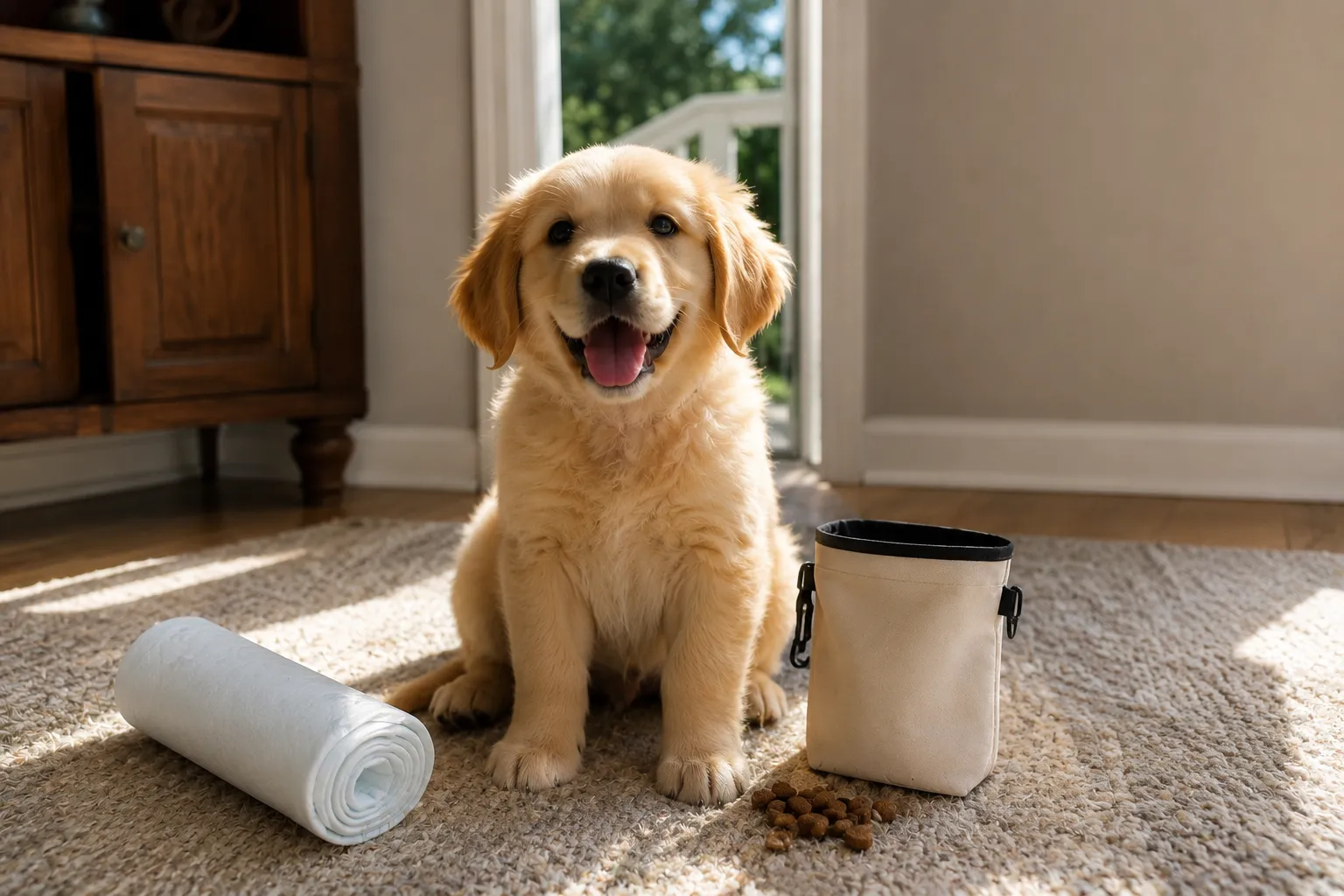
- Enzyme cleaner — accidents happen. Regular cleaners leave scent traces that invite repeat accidents; enzyme cleaners actually remove them.
- Puppy pads (optional) and poop bags (not optional).
The first 24 hours: less is more
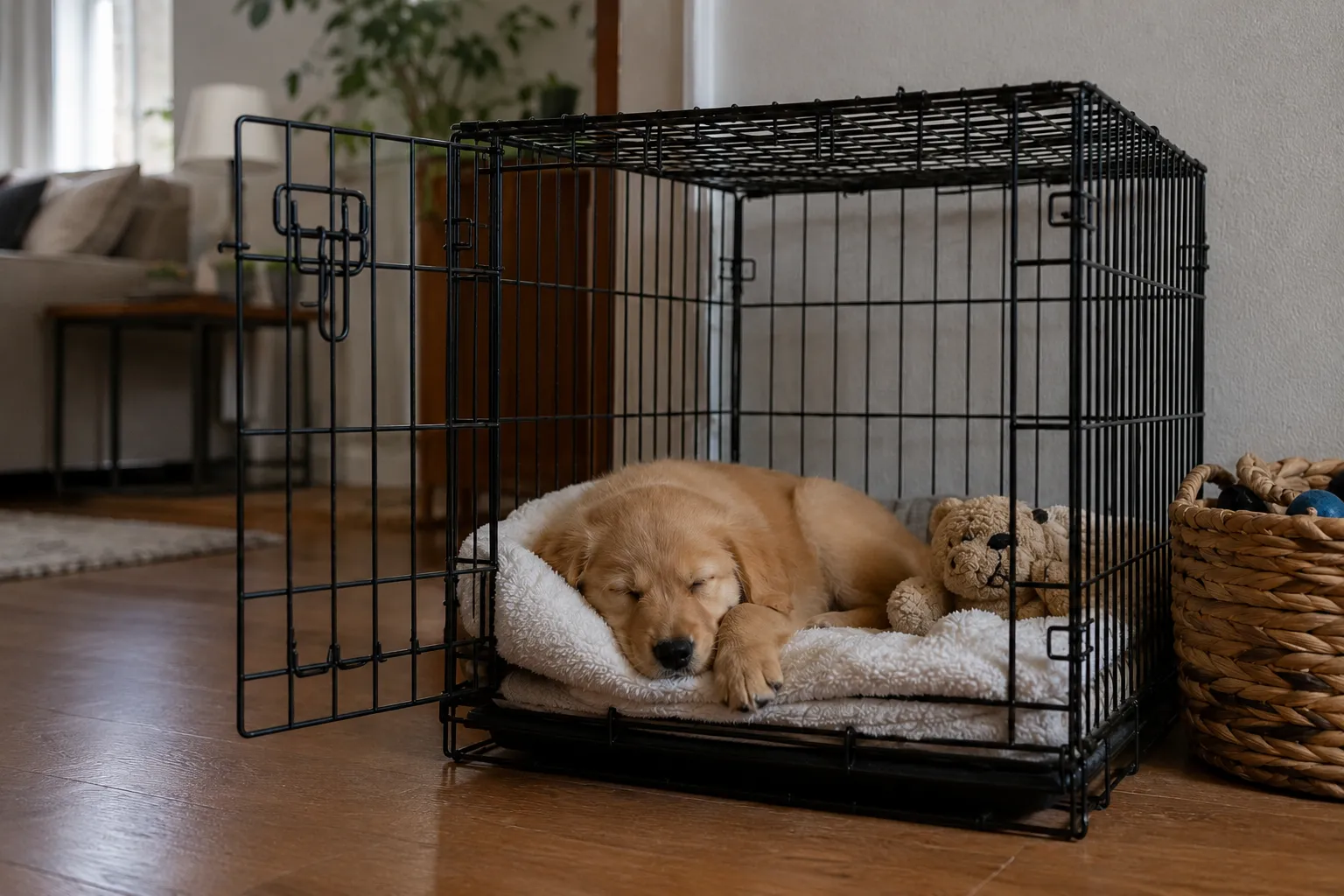
The car ride home is your puppy’s first time away from everything it knows. The kindest first day is a boring one:
- Straight to the toilet spot. Before you even go inside, take the puppy to the place you want it to toilet. If it goes — praise like it won a medal.
- Tour one room, not the house. Limit the world to one puppy-proofed room for the first days. Whole-house freedom comes later.
- Show the crate, don’t force it. Door open, treats inside, zero pressure.
- Keep visitors away. Friends can meet the puppy next week. Today is for decompressing.
- Expect crying at night. It’s not manipulation — it’s a baby animal alone for the first time. A crate next to your bed for the first week works wonders.
Feeding: how much and how often
Puppies eat little and often. As a general rule:
| Age | Meals per day |
|---|---|
| 8–12 weeks | 4 |
| 3–6 months | 3 |
| 6–12 months | 2 |
Follow the feeding chart on your specific food (amounts vary hugely by brand and breed size), keep fresh water down at all times, and resist the “one more treat” eyes. Treats should stay under ~10% of daily calories — especially during training weeks when treats flow freely.
For the full stage-by-stage version, including portion sizes and when to switch to adult food, see our puppy feeding schedule by age.
Foods that are dangerous for dogs
Chocolate, grapes and raisins, onions, garlic, xylitol (in sugar-free gum and some peanut butters), alcohol and cooked bones are all toxic or dangerous to dogs. Keep them out of reach and brief the whole household.
Vet care in the first months
Book the first vet visit within a few days of bringing your puppy home. Your vet will set the exact schedule, but expect:
- Vaccinations — a course of core vaccines over several weeks
- Parasite treatment — worming and flea/tick prevention
- Microchipping — if not already done
- Spay/neuter conversation — timing varies by breed and size; ask your vet
- Pet insurance — genuinely worth researching now, before any condition becomes “pre-existing”
Until your vet confirms vaccinations are complete, avoid areas with unknown dogs — but do carry your puppy out into the world to see traffic, people and noise. Which brings us to the most underrated job of all…
Socialization: the 16-week window
Roughly between 3 and 16 weeks of age, puppies decide what’s normal and what’s scary — and that decision tends to stick for life. Your job is to make everything normal: men in hats, umbrellas, vacuum cleaners, car rides, children, other animals, the works.
Keep every new experience short, positive and paired with treats. One calm minute watching traffic beats an overwhelming hour at a market. A well-socialized puppy is the best behavior insurance you’ll ever get, and it’s free.
Training: start day one, keep it tiny
Forget hour-long sessions. Puppy attention spans run about 5 minutes:
- Name response — say the name, reward the look. Ten times a day.
- Sit — lure with a treat, reward the bottom hitting the floor.
- Toilet routine — out after every meal, nap and play session. Praise outside success; ignore indoor accidents (never punish — it just teaches hiding).
- Bite manners — nipping is normal baby behavior with a simple fix. Our gentle 7-step method covers it.
- Alone time — practice leaving the room for 30 seconds, then minutes. This tiny habit is the vaccine against separation anxiety.
The first-month survival timeline
- Week 1: Routine, toilet trips, crate meals, sleep. Survive. That’s it.
- Week 2: Name, sit, short alone-time reps. First vet visit done.
- Week 3: Carry-socialization outings, gentle handling practice (paws, ears, mouth — future-you at the groomer says thanks).
- Week 4: Leash practice in the garden, longer alone-time, puppy class booked. You’ll suddenly notice: fewer accidents, real progress. It works.
Frequently asked questions
How long does it take a puppy to settle into a new home?+
Most puppies settle into a basic routine within 1–3 weeks, but full confidence takes about three months. The '3-3-3 rule' is a good guide: 3 days of overwhelm, 3 weeks of settling, 3 months to feel truly at home.
Should my puppy sleep in my bedroom?+
For the first week or two, yes — a crate beside your bed reassures the puppy and lets you hear toilet-time stirring at night. You can gradually move the crate to its permanent spot once the puppy sleeps calmly.
When can my puppy go outside for walks?+
Generally about 1–2 weeks after the final vaccination in the puppy course — your vet will confirm the exact timing. Before that, carry your puppy outside for socialization rather than walking on public ground.
How much does a puppy cost in the first year?+
Beyond the purchase or adoption fee, budget for food, vaccinations, microchipping, neutering, insurance and gear. The first year is the most expensive of a dog's life — commonly in the four figures. An emergency fund or insurance matters more than any single purchase.
What's the biggest mistake first-time puppy owners make?+
Inconsistency. Letting the puppy on the sofa on Monday and scolding it on Tuesday, or skipping toilet trips when it rains, confuses the puppy and slows everything down. Decide the rules before the puppy arrives, and get the whole household to stick to them.
The bottom line
Puppyhood is a short, chaotic, wonderful season — about six months of real work in exchange for a decade of the best companionship there is. Get the checklist items sorted, protect the routine, socialize early, and keep training sessions tiny and fun.
You won’t do it perfectly. Nobody does. Consistent-and-imperfect wins every time.
Sources & further reading
This article draws on guidance from these trusted organizations. Always consult your own veterinarian for advice specific to your pet.
Written by
Raghav DeedwaniyaFounder & Editor
Raghav Deedwaniya is the founder and editor of Petifys, and the author behind its pet care content. I’m a lifelong pet owner, not a veterinarian — I’ve been around dogs since childhood, and that hands-on experience is what got me into writing about responsible pet ownership. At Petifys I create practical, easy-to-understand guides, each one carefully researched using trusted sources such as the AVMA, ASPCA and International Cat Care. My aim is to help you make informed everyday decisions — but for anything involving your pet’s health, always consult a qualified veterinarian who can examine your animal in person.
Disclosure: Some links in this article are affiliate links. If you buy through them we may earn a small commission at no extra cost to you. We only recommend products we believe in. Learn more.