Best Chew Toys for Teething Puppies in 2026
Save your furniture and soothe sore gums. Our researched picks for the best puppy teething toys — rubber, freezable and rope — plus what's safe and what isn't.
On this page
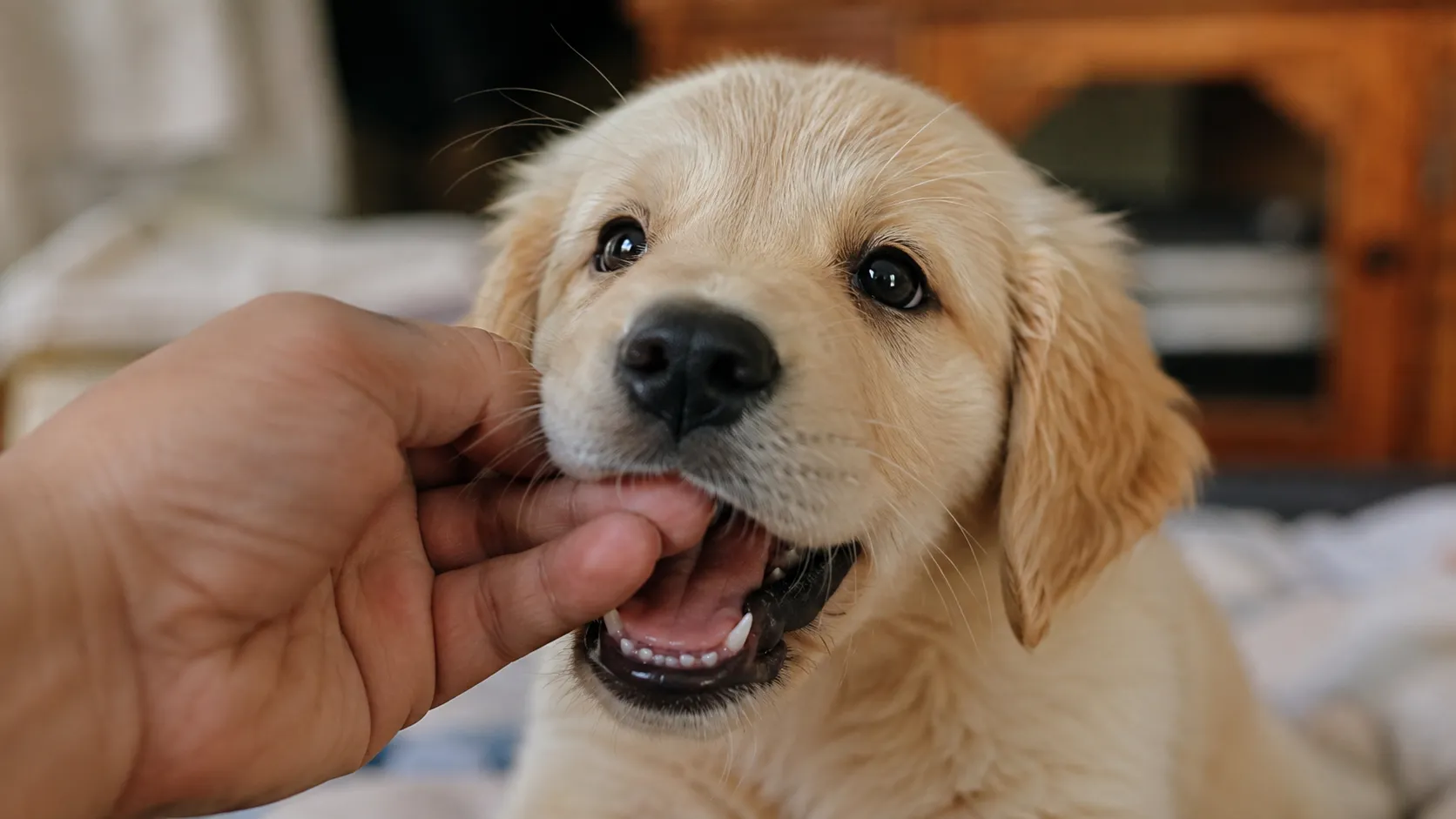
Between roughly 3 and 7 months old, your puppy’s 28 baby teeth fall out and 42 adult teeth push through. It hurts, it itches, and your puppy will treat the entire world as a chew toy: table legs, shoes, and your hands included.
You can’t stop teething. You can decide what gets chewed. The right toys soothe sore gums and protect your furniture, and, paired with the redirection method in our puppy biting guide, they teach your dog lifelong good chewing habits. Here’s what works.
The 3-toy rule
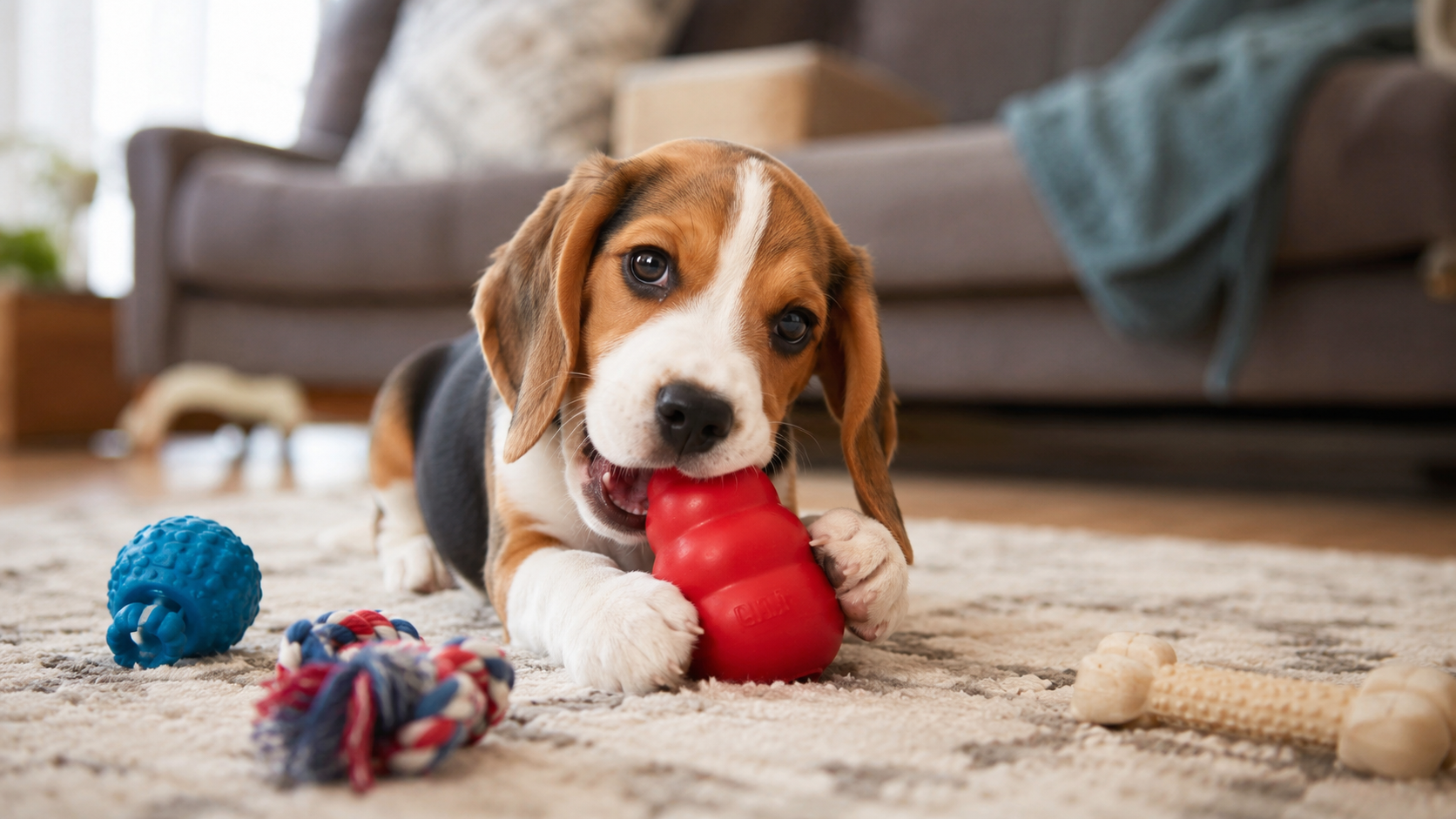
Teething puppies need variety, not quantity: one firm rubber toy for serious gnawing, one freezable/soft option for sore-gum days, and one rope or plush for play. Rotate them so they stay novel — a “new” toy from the cupboard beats a fresh purchase.
What makes a teething toy safe?
- The thumbnail test: you should be able to dent the surface with a thumbnail. Harder than that (antlers, hooves, hard nylon marketed for adult power-chewers) can crack puppy teeth.
- Right size: big enough that it can’t be swallowed or lodge behind the molars — always size up when in doubt.
- No shredding parts: avoid toys that break into chunks. Squeakers and stuffing are fine only under supervision.
- Inspect weekly, replace when torn. A $10 toy is cheaper than intestinal surgery — that’s the whole calculus.
How we chose these toys
Full transparency: these are research-based picks, not a chew-lab. We weighed each toy on the things that actually matter for a teething puppy — material safety (the thumbnail test), size options, durability versus how gentle it is on baby teeth, and the pattern across long-term owner reviews — and cross-checked the safety guidance against veterinary and welfare sources. We earn a commission if you buy through our links; it never decides what makes the list, and we call out each toy’s weakness honestly.
Our picks
Best overall: the classic rubber workhorse

Nylabone Puppy Teething Chew Toy
- ✓Puppy-soft rubber protects baby teeth
- ✓Stuffable — doubles as a boredom buster
- ✓Practically indestructible for its class
- ✕Needs the right size for your pup
- ✕Plain rubber bores some dogs until stuffed
We may earn a commission if you buy through this link, at no extra cost to you.
The puppy-specific KONG is softer than the adult version, bounces unpredictably, and — its superpower — can be stuffed with soft food and frozen, turning it into a 30-minute gum-numbing project. One of the few toys that’s still useful after teething ends.
Best for sore-gum days: freezable teethers

KONG Puppy Goodie Bone - Stuffable Toy - Natural Rubber Chew for Puppies - Toy for Teething - for Small Puppies - Blue
- ✓Cold numbs inflamed gums fast
- ✓Puppy-grade softer material
- ✓Easy to clean
We may earn a commission if you buy through this link, at no extra cost to you.
Cold is nature’s teething medicine. Freezable toys (or the low-tech version: a wet washcloth, twisted and frozen) give genuine relief on the worst days — you’ll often see a frantic chewer visibly relax.
Best for play sessions: rope toys

Toozey 7 Pack Small Dog Toys, Puppy Teething Toys, Durable Ropes Chew Toys, Cute Calf Squeaky Dog Toys, Non-Toxic and Safe
- ✓Great for supervised tug and fetch
- ✓Fibers gently clean emerging teeth
- ✓Cheap to replace
- ✓multiple toys
We may earn a commission if you buy through this link, at no extra cost to you.
Rope toys are the social option — perfect for the tug games that redirect mouthing away from your hands. Treat them as together toys, not crate toys, and retire them once they fray.
Freezer tricks that cost nothing
- Frozen washcloth: soak, twist, freeze. The original teething toy.
- Frozen carrot (large, whole): crunchy, cold, edible — supervise and count it toward daily food.
- Stuffed-and-frozen KONG: plain wet food or unsweetened plain yogurt. Avoid peanut butter unless you’ve confirmed it’s xylitol-free — xylitol is highly toxic to dogs.
- Ice cubes in the water bowl: the budget entertainment package.
Skip these 'chews' for puppies
Cooked bones (they splinter), antlers and hooves (tooth-crackers), rawhide (choke and blockage risk, especially for gulpers), and anything smaller than your puppy’s muzzle. When a chew is questionable, the boring answer — a size-appropriate rubber toy — is the right one.
Make the toys actually get chosen
Toys don’t compete with your sofa by existing — they win by being better:
- Redirect every wrong chew to a toy, then praise the toy-chewing. (The full method is step 2 of our biting guide.)
- Rotate: 3 toys out, the rest hidden. Swap weekly.
- Make toys interactive: a tossed toy or a stuffed KONG beats a static one.
- Manage the environment: during peak teething, shoes go in cupboards and the puppy doesn’t get unsupervised access to the antique table. Prevention isn’t cheating — it’s the plan. (More on setup in the first-time puppy checklist.)
Frequently asked questions
What age do puppies teethe the worst?+
The peak is usually 4–6 months, when the molars come through. Most puppies have their full set of 42 adult teeth by 6–7 months, and the frantic chewing eases noticeably after that — though enjoyment of chewing lasts for life.
Are frozen toys safe for teething puppies?+
Yes — cold is one of the best natural soothers for inflamed gums. Use puppy-specific freezable toys, a frozen twisted washcloth, or a stuffed frozen KONG. Supervise as with any chew, and let very icy items sit a minute before handing them over.
What should puppies NOT chew on while teething?+
Cooked bones, antlers, hooves, very hard nylon chews, rawhide, and anything small enough to swallow. A good rule: if you can't dent it with a thumbnail, it's too hard for puppy teeth.
How many chew toys does a puppy need?+
Three or four good ones beat a basket of twenty: one firm rubber toy, one freezable soother, and one or two play toys like ropes. Rotate weekly so they stay interesting.
Why does my puppy still chew furniture despite having toys?+
Usually one of three gaps: the toys are boring (rotate and stuff them), the puppy has too much unsupervised freedom too soon, or it's under-exercised and chewing out of restlessness. Redirect-and-praise every time, and manage the room until habits set.
The bottom line
Stock the 3-toy lineup — a puppy KONG for gnawing, something freezable for the sore days, and a rope for play — run the redirect-and-praise routine, and keep anything you love out of reach for a few months. Teething ends faster than it feels like it will, and the chewing habits you build now are the ones your dog keeps at two, five and ten years old.
Wondering how much longer you’ll be doing this? Our age-by-age timeline for when puppies stop biting shows exactly when teething ends.
Getting the rest of puppyhood right? Our first-time puppy owner’s guide covers the whole first month, and the puppy feeding schedule by age explains how treats fit into their daily calories.
Sources & further reading
This article draws on guidance from these trusted organizations. Always consult your own veterinarian for advice specific to your pet.
Written by
Raghav DeedwaniyaFounder & Editor
Raghav Deedwaniya is the founder and editor of Petifys, and the author behind its pet care content. I’m a lifelong pet owner, not a veterinarian — I’ve been around dogs since childhood, and that hands-on experience is what got me into writing about responsible pet ownership. At Petifys I create practical, easy-to-understand guides, each one carefully researched using trusted sources such as the AVMA, ASPCA and International Cat Care. My aim is to help you make informed everyday decisions — but for anything involving your pet’s health, always consult a qualified veterinarian who can examine your animal in person.
Disclosure: Some links in this article are affiliate links. If you buy through them we may earn a small commission at no extra cost to you. We only recommend products we believe in. Learn more.