How to Potty Train a Puppy Fast (7-Day Method)
Potty train your puppy in about a week with a simple schedule, the crate + praise method, and calm fixes for accidents — no mess, no scolding, no stress.
On this page
Let’s start with the two things nobody tells you at 11pm when you’re mopping the floor again: it is not your puppy’s fault, and it is not going to last forever. A young puppy physically cannot hold their bladder for long — the plumbing simply isn’t finished yet. Potty training isn’t about willpower. It’s about building a routine so predictable that going outside becomes the only habit your puppy ever learns.
Get the routine right and most puppies are reliably asking to go out within a week or two. Here’s the exact 7-day method, minus the guilt.
The whole method in one line
Take them out constantly, reward like crazy the second they finish outside, and never leave a young puppy unsupervised indoors. That’s 90% of it — everything below is the detail.
First, the golden rule of timing
Here’s the number that changes everything: a puppy can usually “hold it” for roughly their age in months, plus one, in hours — and that’s a maximum, not a target. A 2-month-old puppy = about 3 hours between wees during the day, and much less when they’re awake and busy.
So if your plan is “I’ll let them out every few hours,” you’ve already lost. The winning plan is to get ahead of the accident, every single time.
Take your puppy out at all of these moments:
- The instant they wake up — morning and after every nap
- A few minutes after every meal and drink
- After any play or excitement
- Every 1–2 hours in between, awake
- Right before bed, and the moment they stir at night
Yes, that’s a lot of trips. For the first week, over-doing it is exactly the point — you’re stacking the deck so heavily toward success that accidents barely get a chance.
The 7-day plan
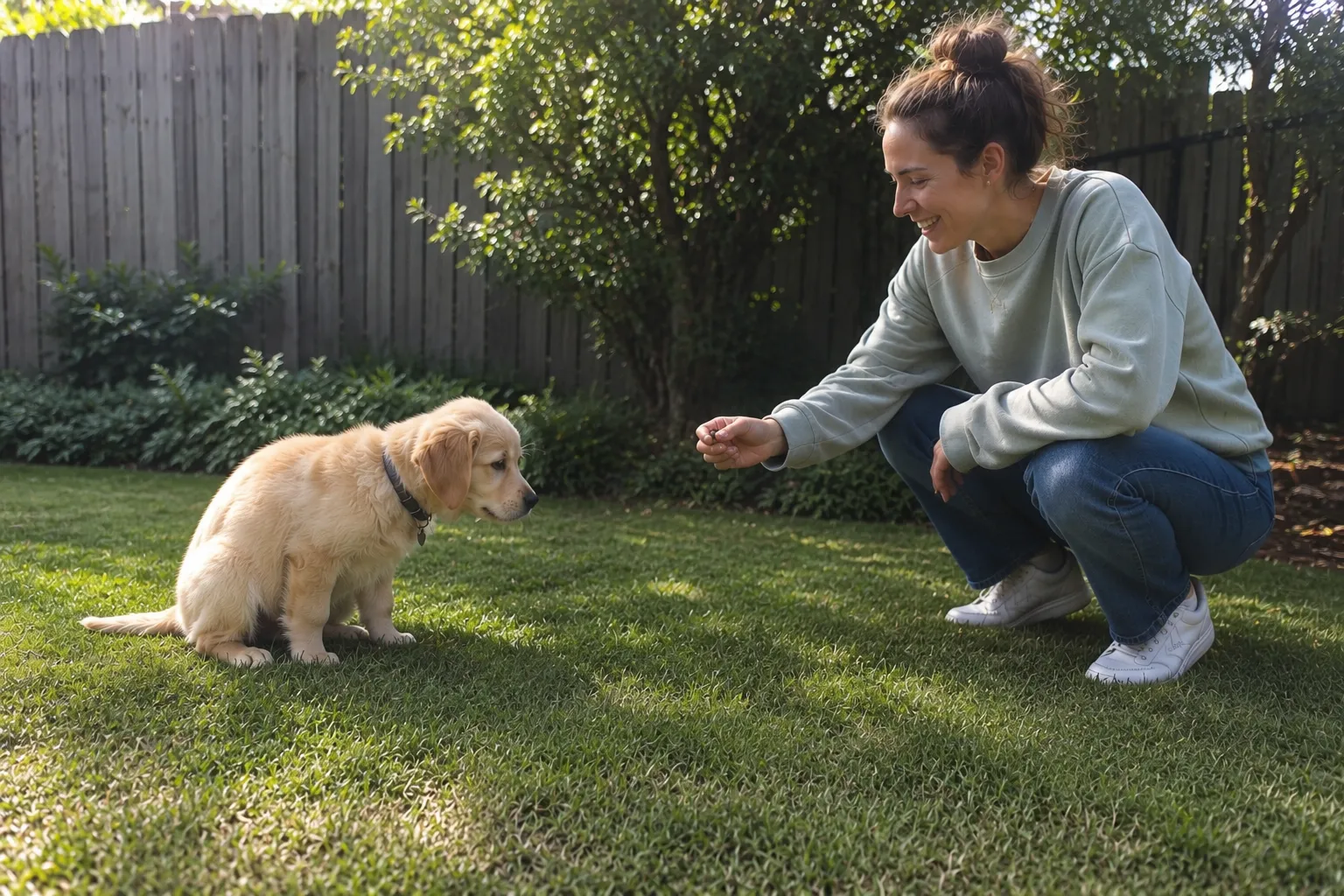
You won’t tick a rigid box each day — puppies aren’t robots — but this is the shape of a fast, low-stress week.
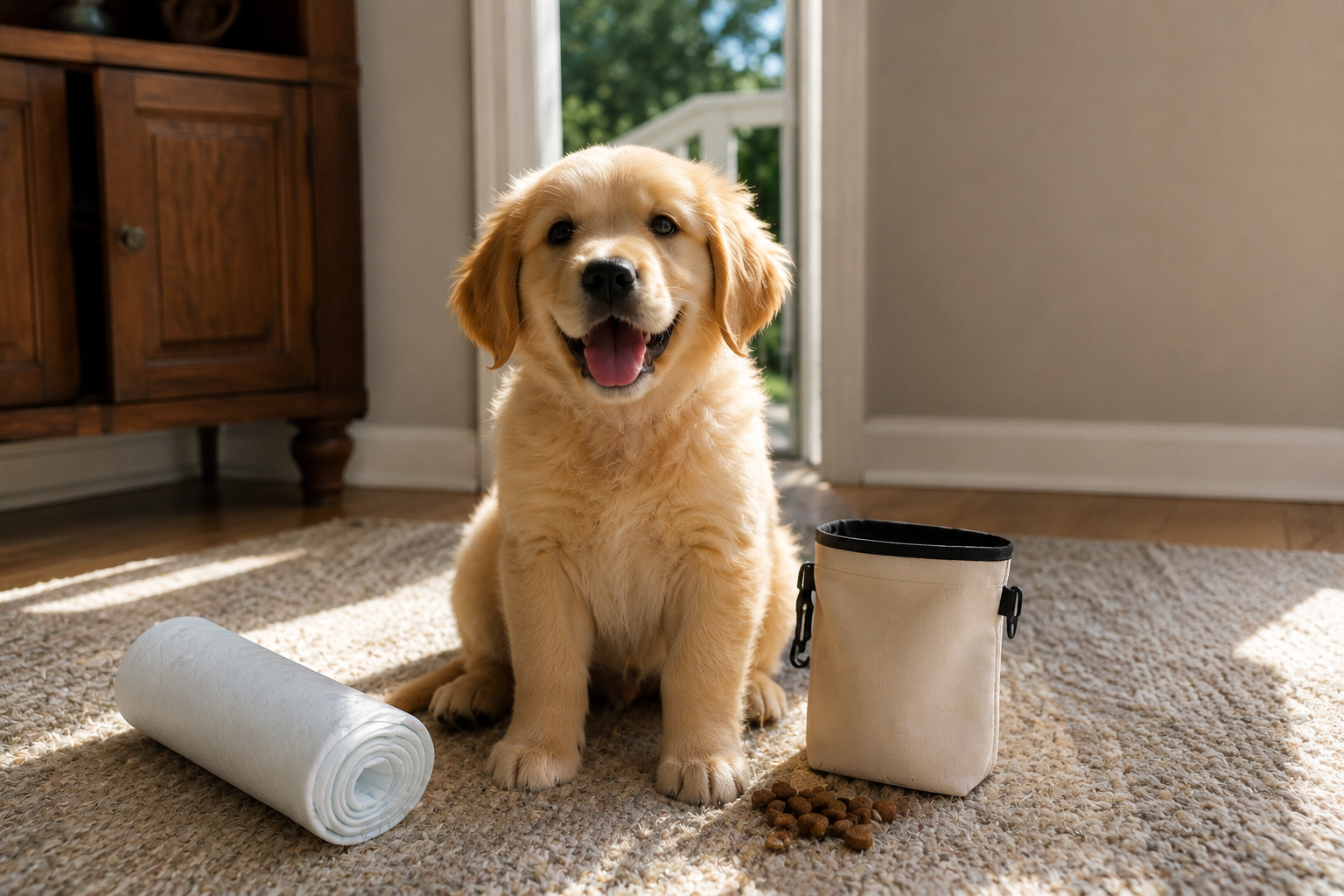
Days 1–2: Set up base camp. Pick one toilet spot outside and always go there — the leftover scent tells your puppy “this is the bathroom.” Choose a short cue word (“wee-wees,” “go potty,” whatever you can say in public without blushing) and say it quietly as they start to go, not before. Start the every-hour trips.
Days 3–4: Learn your puppy’s tells. By now you’ll spot the pre-wee signs — sudden sniffing of the floor, circling, whining, a purposeful little trot away from you. The moment you see one, scoop them up and out. You’re becoming a mind-reader, and it’s the biggest skill in the whole process.
Days 5–6: Stretch the gaps. If accidents have stopped, start leaving a little longer between trips — but keep the after-meal, after-nap, after-play trips sacred. This is also where the crate earns its keep (more below).
Day 7 onward: Reward the ask. Some puppies start heading to the door or looking at you. Reward that like they’ve won the lottery. You’re no longer just preventing accidents — you’re teaching your dog to tell you, which is the real finish line.
The reward is everything (and timing is brutal)
You have about three seconds after your puppy finishes weeing for their brain to link “toileting here = amazing things happen.” Praise and a small treat outside, on the spot — not back in the kitchen 30 seconds later. Late praise trains nothing; instant praise trains fast.
Why the crate makes this 10× faster
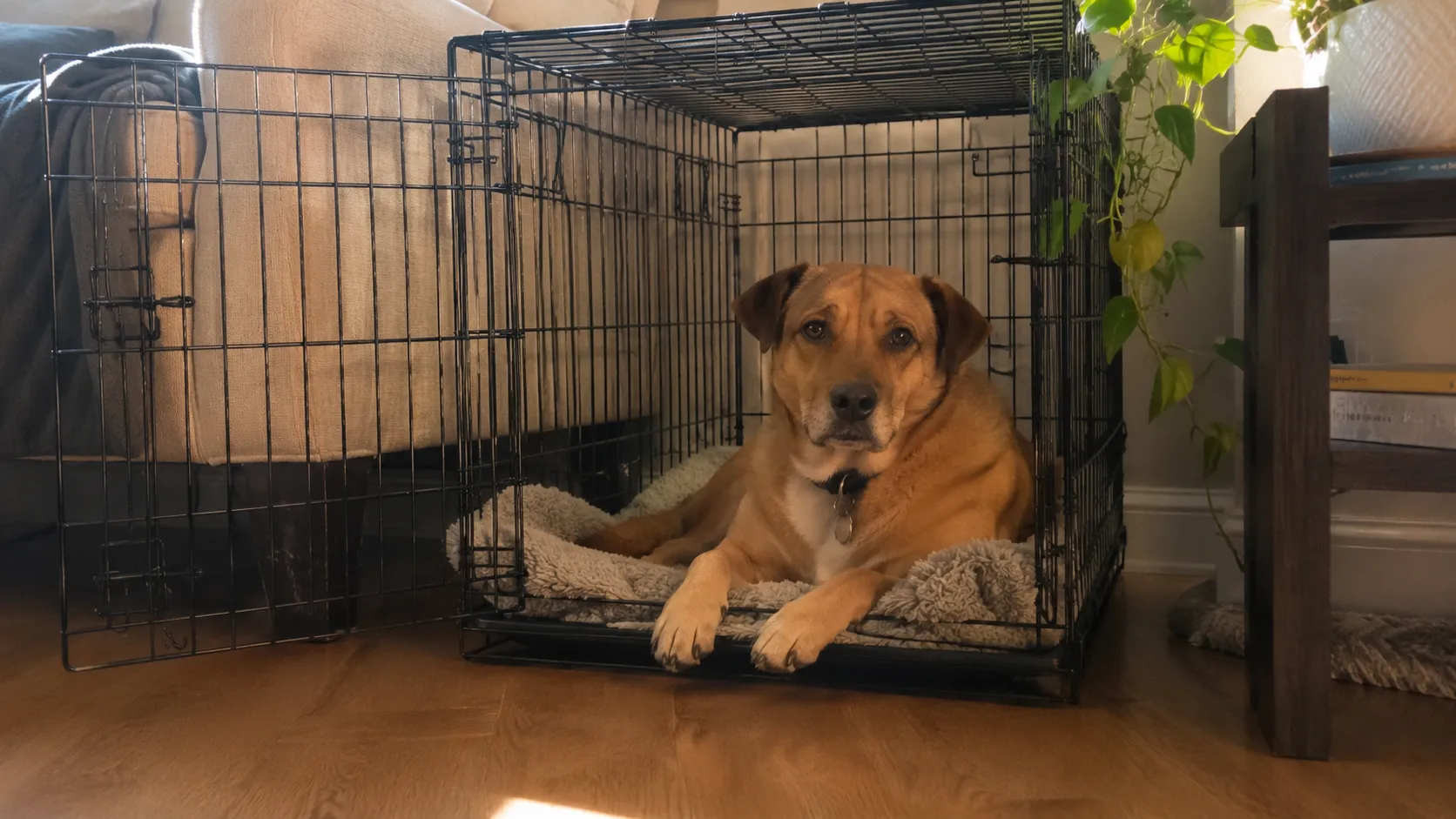
Dogs have a deep instinct not to soil where they sleep. A correctly sized crate (big enough to stand, turn and lie down — no bigger) uses that instinct: your puppy will hold on rather than mess their own bed, which buys you a clean window to carry them straight outside.
Used kindly, the crate isn’t a cage — it’s a house-training superpower and a safe napping den. We walk through the gentle, cry-free version step by step in our guide to crate training a puppy, and it pairs perfectly with this potty plan.
The rule that ties them together: supervise or crate — never “loose and unwatched.” A puppy wandering the house alone will find a corner. When you can’t have your eyes on them, they’re in the crate, in a puppy pen, or tethered near you. Freedom is earned one clean week at a time.
Handling accidents without wrecking your progress
Accidents aren’t a setback — they’re feedback that you missed a trip. What you do in the next ten seconds decides whether they keep happening.
- If you catch them mid-act: a calm, non-scary “ah-ah!”, scoop them up, and rush outside to finish. Praise if they do. Don’t shout — you want to interrupt, not terrify.
- If you find it after the fact: say nothing. Clean it and move on. Your puppy cannot connect a telling-off to a puddle they made ten minutes ago — all they learn is that you are unpredictable and scary.
- Never rub their nose in it. It’s an old myth that does real harm: it doesn’t teach cleanliness, it teaches your puppy to hide where they go — often behind the sofa where you’ll find it days later.
- Clean with an enzyme cleaner, not a normal one. Regular cleaners hide the smell from you, but your puppy’s nose still reads “toilet here” and returns to the spot. Enzyme cleaners actually break the scent down.
Sudden accidents in a nearly-trained puppy? Think health.
If your puppy was doing well and suddenly starts having lots of accidents — especially with straining, frequent tiny wees, or blood — call your vet. Urinary infections are common in puppies and no amount of training fixes a medical problem. This guide is general advice, not veterinary care.
The night shift (and how to survive it)
Nights are just daytime with less sleep. A young puppy usually can’t last the whole night at first, so plan for it rather than resenting it:
- Last drink an hour or so before bed; last toilet trip the very last thing before lights-out.
- Crate beside your bed so you hear them stir — that stir is your alarm.
- A 3am trip is business, not a party. Lights low, carry out, cue word, praise if they go, straight back to bed. No play, no chat, no snacks. Make night wees boring and your puppy won’t start waking for the entertainment.
- Most puppies stretch to sleeping through within a few weeks as their bladder grows. It gets better fast — promise.
Can you potty train a puppy in 3 days?
You’ll see this promise a lot, so here’s the honest answer: you can make enormous progress in 3 days, but you cannot finish the job in 3 days. Anyone claiming otherwise is describing the owner’s behavior, not the puppy’s bladder.
What genuinely is possible in a focused 3-day push, if you can take time off and give the puppy your full attention:
- Establish the toilet spot and the cue word. Three days of consistent repetition is plenty for a puppy to start associating that patch of grass with going.
- Learn their signals. Circling, sniffing, sudden restlessness. By day three you’ll be catching most of them.
- Get the routine locked in for you and everyone else in the house.
- Cut accidents dramatically, simply because you’re taking them out often enough that mistakes have no room to happen.
What is not possible in 3 days is bladder maturity. An 8-week-old puppy physically cannot hold on for more than a couple of hours, no matter how well they understand the rules. That’s plumbing, not training.
So what’s the fastest way to potty train a puppy? Exactly what’s above: take them out far more often than feels necessary, reward within three seconds every single time, never leave them loose and unsupervised, and use the crate to prevent the mistakes you’d otherwise be cleaning up. There’s no shortcut that beats frequency and consistency — the “fast” part comes from you being relentless for a week, not from a trick.
Training an adult dog? The same method works, and usually faster, because an adult bladder can hold on. Take a rescue or older dog back to basics for a fortnight: out every couple of hours, big rewards outside, enzyme-clean every indoor accident, and supervise closely indoors until you’ve had two clean weeks.
How long until they’re actually trained?
Honesty time: “reliable in a week” means the routine is working and accidents are rare while you’re managing the environment. A puppy who is genuinely, fully house-trained — asks to go out, holds it for hours, can be trusted with some freedom — is usually more like 4 to 6 months old, and some smaller breeds take longer because their bladders are tiny.
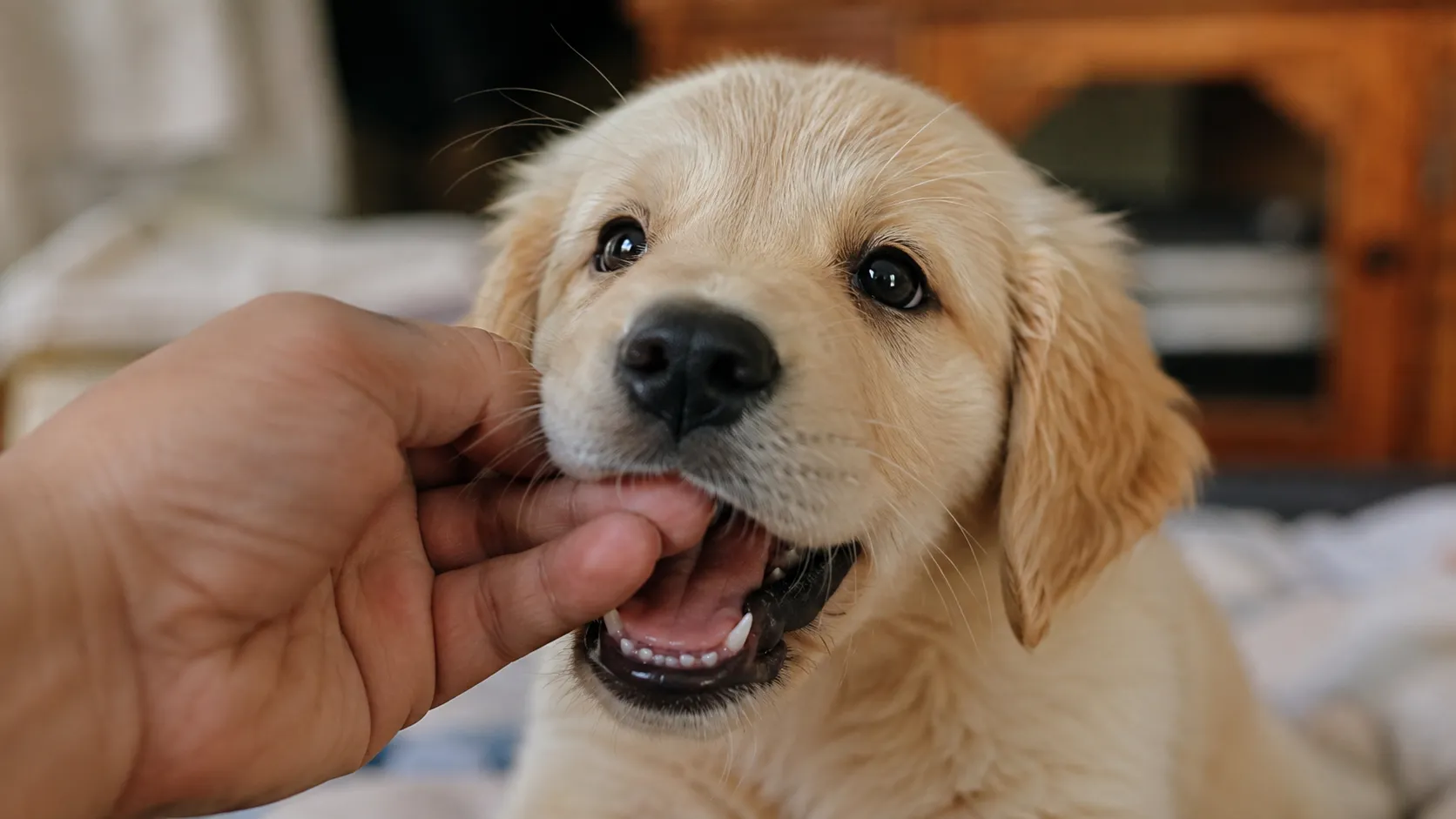
So don’t panic at a random accident in month three. That’s not failure — that’s a baby animal. Keep the routine, keep the rewards, and it clicks. This is one piece of the bigger first-month picture in our first-time puppy owner’s guide, and it works hand-in-hand with sorting out the play-biting phase that tends to peak at exactly the same time.
Frequently asked questions
How long does it take to potty train a puppy?+
With a consistent schedule, most puppies are having few accidents within 1–2 weeks. But being fully reliable — holding it for hours and asking to go out — usually comes at 4–6 months, once the bladder has matured. Small breeds often take a little longer.
Should I wake my puppy up at night to pee?+
For a very young puppy, yes — take them out once during the night, and any time they stir, because they physically can't hold it until morning yet. Keep it calm and boring so they don't start waking for attention. Most puppies drop the night trip within a few weeks.
How do I stop my puppy peeing in the house?+
Prevent the chance rather than punish the result: take them out constantly (after every sleep, meal, drink and play), reward instantly the second they go outside, and never leave them loose and unsupervised indoors — use a crate or pen when you can't watch. Clean accidents with an enzyme cleaner so the scent doesn't pull them back.
Is it bad to punish a puppy for accidents?+
Yes. Puppies can't link a telling-off to something they did minutes ago, and rubbing their nose in it just teaches them to hide where they go. Punishment slows training down. Calmly interrupt if you catch them in the act, take them outside, and reward success instead.
What age should a puppy be fully potty trained?+
Most puppies are dependable by around 4–6 months with consistent training, though occasional accidents up to that age are completely normal. If a previously reliable puppy suddenly regresses, rule out a urinary infection with your vet before assuming it's behavioral.
The bottom line
Potty training a puppy fast isn’t a trick — it’s relentless routine and lightning-fast rewards. Take them out more often than feels necessary, throw a tiny party every time they go in the right spot, lean on the crate to prevent mistakes, and stay calm about the puddles. Do that for one focused week and you’ll feel the whole thing start to click. Your floors — and your sleep — are closer than they feel at 3am.
Sources & further reading
This article draws on guidance from these trusted organizations. Always consult your own veterinarian for advice specific to your pet.
Written by
Raghav DeedwaniyaFounder & Editor
Raghav Deedwaniya is the founder and editor of Petifys, and the author behind its pet care content. I’m a lifelong pet owner, not a veterinarian — I’ve been around dogs since childhood, and that hands-on experience is what got me into writing about responsible pet ownership. At Petifys I create practical, easy-to-understand guides, each one carefully researched using trusted sources such as the AVMA, ASPCA and International Cat Care. My aim is to help you make informed everyday decisions — but for anything involving your pet’s health, always consult a qualified veterinarian who can examine your animal in person.
Disclosure: Some links in this article are affiliate links. If you buy through them we may earn a small commission at no extra cost to you. We only recommend products we believe in. Learn more.