How to Crate Train a Puppy (Even If They Cry)
Crate train your puppy kindly in about a week: choosing the right crate, a 5-stage method that works, night-time crying fixes, and the mistakes to avoid.
On this page
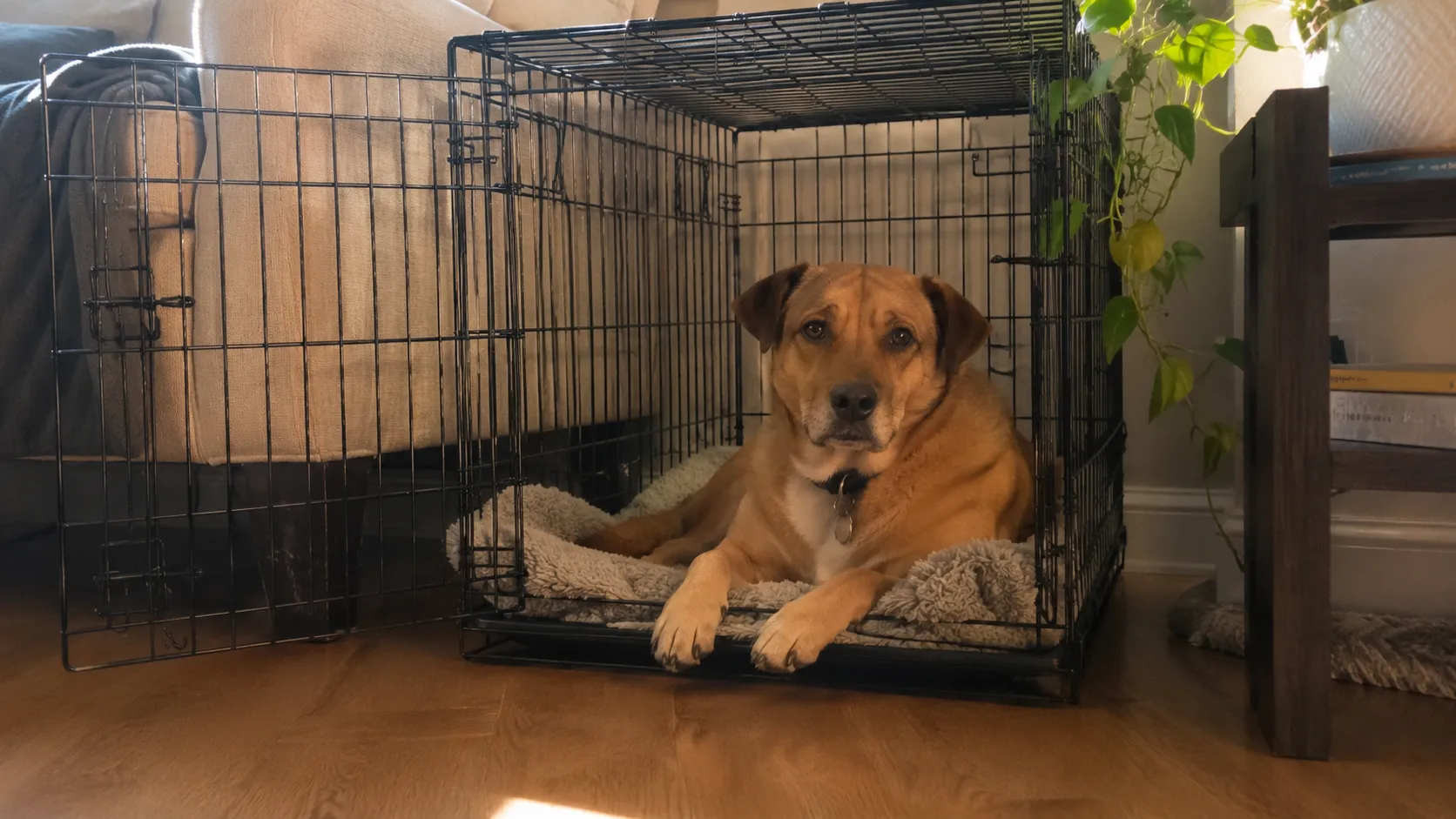
Let’s clear up the biggest myth first: a crate is not a cage, and crate training is not cruel. Done right, a crate becomes your dog’s bedroom — the one place in a noisy human house that is entirely theirs. Dogs are den animals; give them a good den and they choose it, all their lives.
Done wrong (as punishment, or for endless hours), a crate becomes a prison — and yes, that’s when it’s a problem. This guide is the done-right version: a five-stage method that takes most puppies about a week, plus honest answers for the part everyone dreads — the crying.
Why bother crate training?
Three reasons: it supercharges toilet training (dogs avoid soiling their bed), it keeps a chewing-machine puppy safe when you can’t watch them, and it makes vet stays, travel and emergencies far less stressful forever after. It’s a core part of our first-month puppy plan.
Choosing the right crate
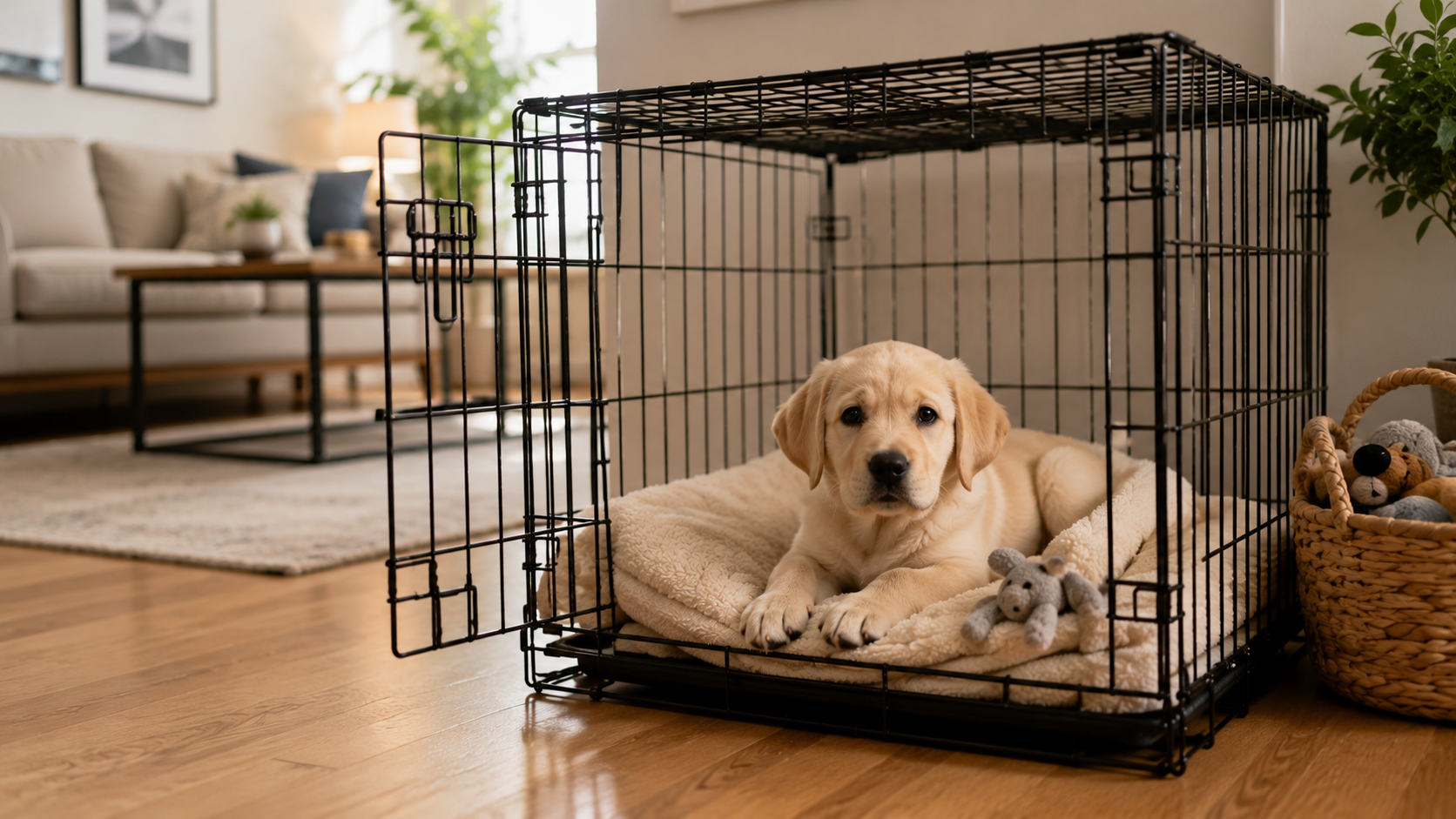
- Size: big enough to stand up, turn around and lie stretched out — and not much bigger. A huge crate lets a puppy sleep at one end and toilet at the other, which defeats the toilet-training superpower. Buy adult-size with a divider panel and grow the space with the puppy.
- Type: wire crates (airy, foldable, divider-friendly) suit most homes. Plastic travel crates feel more den-like for anxious pups. Fabric crates are for already-trained adults — a bored puppy unzips them with their teeth.
- Location: the family room corner by day — dogs want to be near you. For the first week or two of nights: your bedroom (more on that below).
- Furnishing: washable bedding, one safe chew toy. That’s the whole interior-design brief.
The 5-stage method
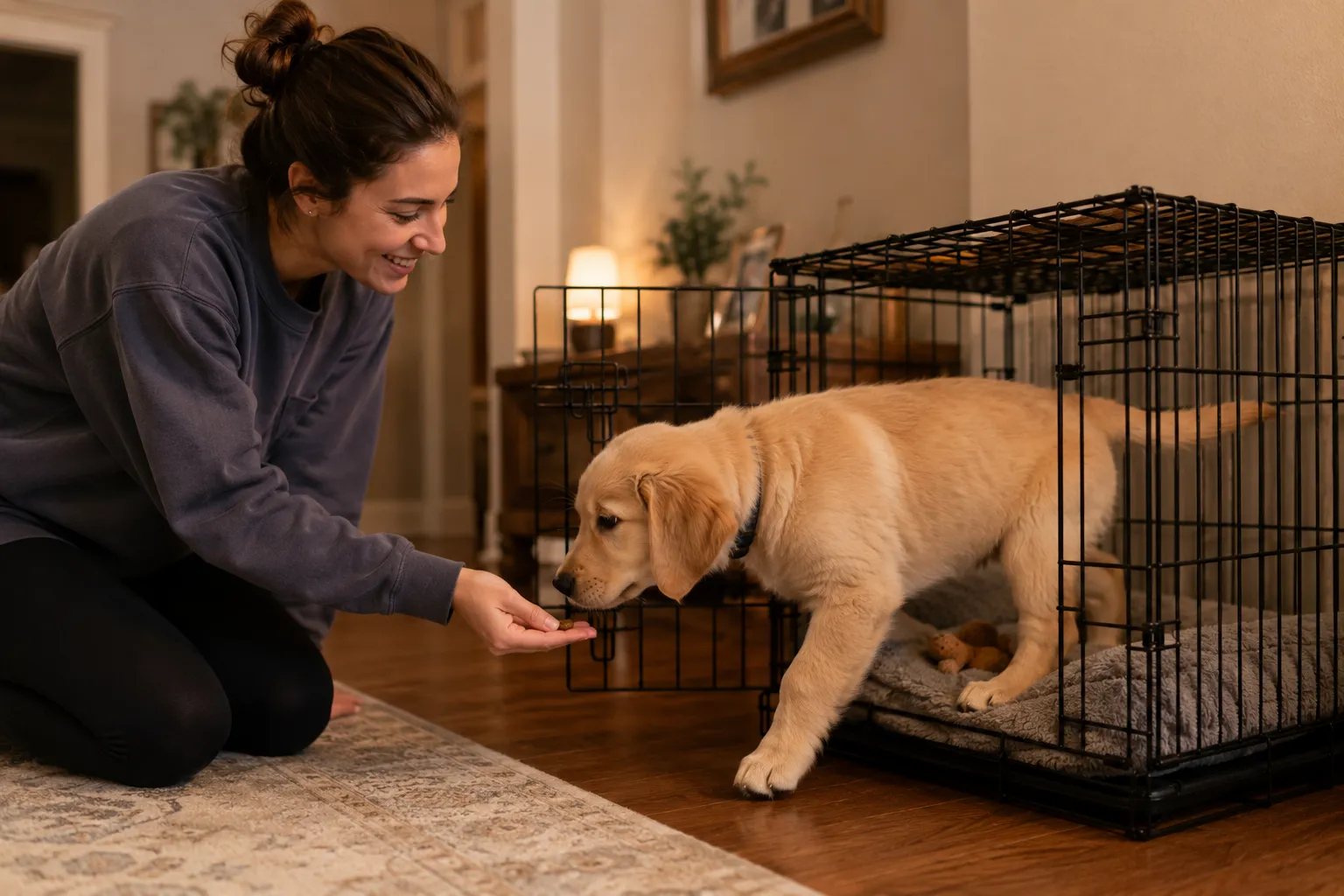
Move to the next stage only when the current one is boringly easy. Some puppies do all five in three days; most take about a week; a few need two. All of those are fine.
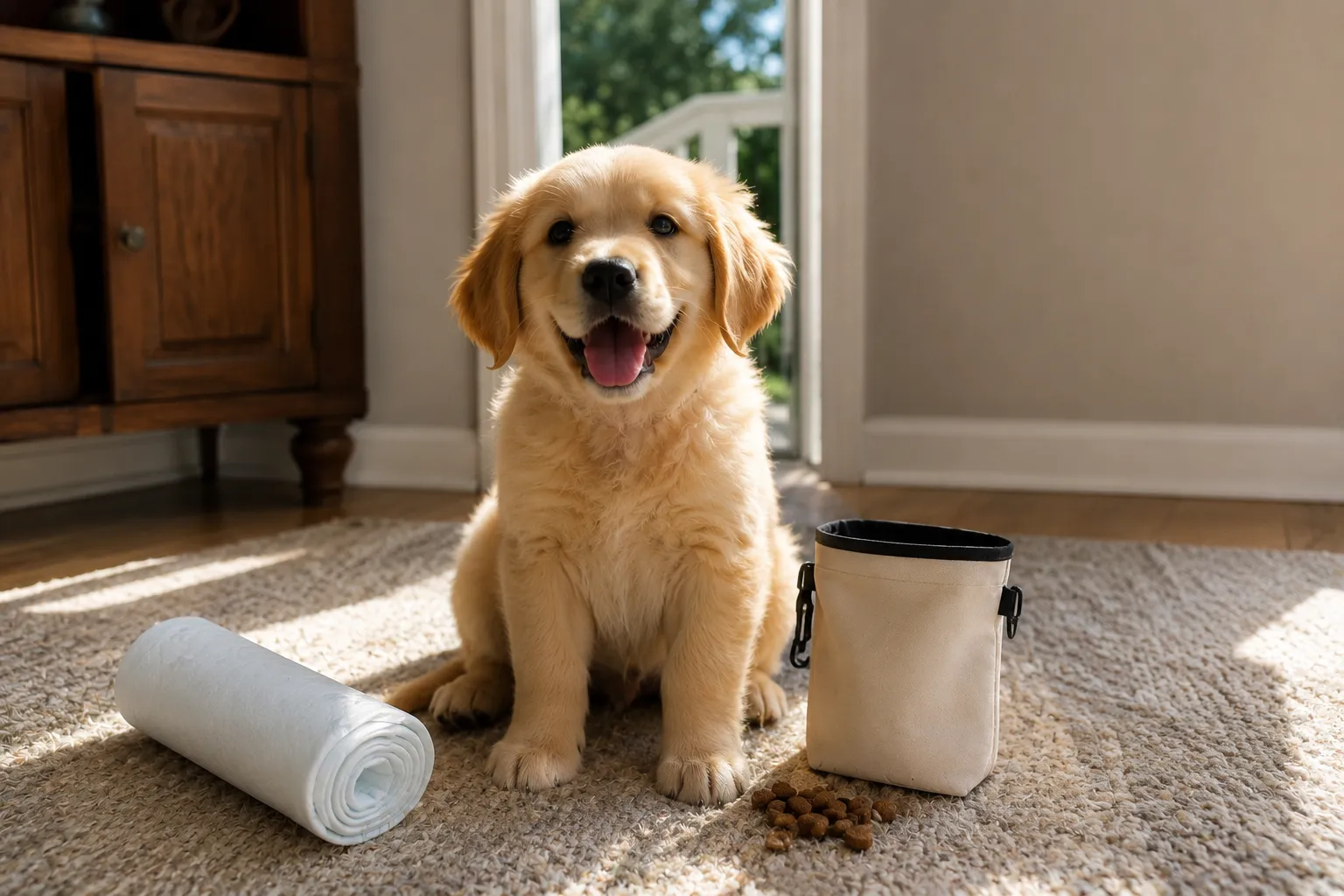
Stage 1 — The magic box (day 1). Door open — permanently, for now. Toss treats inside a few times a day and walk away. Feed meals just inside the door. The only goal: crate = good things appear here. Zero pressure.
Stage 2 — Dining room (days 1–2). Move the food bowl to the back of the crate. Puppy walks in voluntarily to eat, walks out after. Sprinkle surprise treats in the crate when the puppy isn’t looking — let them discover the crate pays out like a slot machine.
Stage 3 — Door closed, you’re right there (days 2–4). Close the door during meals, open it the moment eating ends. Extend by a minute or two each time, sitting nearby. Introduce a cue word (“crate” / “bed”) as they walk in, treat on arrival.
Stage 4 — You leave the room (days 4–6). Crate the puppy with a long-lasting chew, leave the room for 30 seconds, come back before fussing starts, open calmly. Repeat, stretching to 5, 10, 20 minutes. Vary it — sometimes short, sometimes longer — so leaving stops being an event.
Stage 5 — Real absences (day 6+). Short real errands: 15–30 minutes out of the house. Keep departures and returns boring — no dramatic goodbyes, no party on return. Calm out, calm in.
The crying question (read before night one)
Night crying is the point where good owners accidentally teach bad lessons. Here’s the honest playbook:
- First 1–2 weeks: crate in your bedroom. A baby animal alone in the dark in a new house should cry — that’s healthy attachment, not naughtiness. Beside your bed, they can hear you breathe; most settle fast.
- Tire them out first. Play, toilet trip, then bed. A sleepy puppy argues less.
- Cover part of the crate with a blanket — den-dark helps many pups switch off.
- Whimpering vs. needing the toilet: young puppies genuinely can’t hold it all night. A crying puppy at 3 a.m. gets one calm, lights-low, zero-fun toilet trip, then straight back to bed. No play, no cuddling marathon.
- Don’t open the door because of crying. Wait for even two seconds of quiet, then open. Opening mid-cry teaches “crying = door opens” — the exact opposite lesson. (This is the same consistency principle as bite-inhibition training: reward the behavior you want more of.)
Crate time limits — non-negotiable
A crate is a bedroom, not storage. Rough daytime maximums: 8–10 weeks ≈ 1 hour; 3 months ≈ 2–3 hours; 6 months ≈ 4 hours (plus overnight, which is different — sleeping dogs’ bodies slow down). Need longer coverage? Use a puppy-proofed pen or a midday visitor. And never, ever use the crate as punishment.
How to crate train a puppy overnight
Nights are the part people dread, so treat them as a separate skill:
- Put the crate beside your bed for the first week or two. Being able to hear and smell you settles most puppies faster than anything else you can do.
- Tire them out, then toilet, then bed — in that order, every night.
- Cover part of the crate with a blanket so it feels den-dark.
- Set an alarm for one middle-of-the-night toilet trip for young puppies, rather than waiting to be woken by crying. Getting there first means you never reward the crying.
- Keep the 3 a.m. trip boring: lights low, straight out, cue word, praise, straight back. No play, no chat.
Most puppies sleep through by around 4–5 months, once their bladder catches up. Pair this with our 7-day potty training method, because crate training and toilet training solve each other.
Crate training a rescue dog or adult dog
An adult rescue is not just a bigger puppy. Many have never seen a crate, and some arrive with genuinely bad associations from a shelter, a transport van or a previous home. Here’s the short version — we cover it properly in our dedicated guide to crate training a rescue dog, including how to tell protest from genuine panic. Adjust the plan:
- Go slower, and never close the door early. Spend days at the door-open, food-in-the-crate stage. Rushing an adult dog with a history undoes weeks.
- Feed every meal in the crate with the door wide open for the first week.
- Never latch the door until they choose to settle inside on their own.
- Watch for real distress, not protest. Frantic scrabbling, drooling, panting, bent bars or injured paws are signs of genuine panic, possibly separation anxiety or a past bad experience. Stop, and speak to a qualified behaviorist. Pushing through panic makes it worse.
- Some rescue dogs never take to a crate, and that is fine. A dog-proofed room with a baby gate achieves the same safety without the fear.
Crate training small breeds
Small dogs (Yorkies, Chihuahuas, Dachshunds and similar) need two adjustments:
- A much smaller crate, or a divider. A tiny puppy in a big crate will simply toilet at one end. Size it so they can stand, turn and stretch out, no more.
- More frequent toilet trips. Tiny bladders empty faster, so expect an extra night trip and shorter daytime stretches than a Labrador of the same age.
- Warmth matters. Small breeds lose heat quickly, so keep the crate out of draughts and give them a decent bed.
Common mistakes that break crate training
- Going too fast. Skipping to closed-door absences on day one creates panic, and panic is hard to undo. Slower is faster.
- Using it as a naughty step. One angry “GO TO YOUR CRATE!” can poison weeks of goodwill.
- Letting them out mid-tantrum. See above — it’s the most reliably learned lesson in all of puppyhood, unfortunately.
- Wrong size or bare crate. A puppy rattling around a huge empty wire box is not experiencing a den.
- All crate, no life. Crates work because the rest of the day is full of exercise, play, training and company. If the day is empty, no box fixes that.
Frequently asked questions
How long does it take to crate train a puppy?+
With the gradual 5-stage method, most puppies accept the crate happily within about a week, and are settled overnight within two. Rushing usually costs more time than it saves — a scared first experience can set training back weeks.
Should I ignore my puppy crying in the crate at night?+
Not exactly. First rule out a genuine toilet need — young puppies can't hold it all night. For protest-crying, wait for a brief pause before opening the door, so you never teach 'crying works.' Keeping the crate beside your bed for the first weeks prevents most night crying entirely.
Where should I put the crate at night?+
For the first week or two: your bedroom, right beside the bed. Your presence settles the puppy and you'll hear when they genuinely need a toilet trip. Once nights are calm, migrate the crate gradually to its permanent daytime spot if you prefer.
How long can a puppy stay in a crate during the day?+
A rough rule: their age in months in hours, capped around 4 hours for daytime confinement even for older puppies. Beyond that, use a puppy-proofed room or pen, or arrange a midday break. Overnight is longer because sleep changes their rhythm.
Should the crate have food and water in it?+
Meals in the crate are a great training tool. For routine daytime naps of an hour or two, water isn't necessary and often just gets spilled; for longer stretches in warm weather, clip-on water bowls or licky mats work without the mess.
The bottom line
Make the crate the best room in the house: meals happen there, treats rain from the sky there, and nobody is ever punished there. Move through the five stages at your puppy’s pace, hold your nerve through night two, and within a couple of weeks you’ll find your dog napping in the crate with the door wide open — by choice. That’s the whole goal.
Sources & further reading
This article draws on guidance from these trusted organizations. Always consult your own veterinarian for advice specific to your pet.
Written by
Raghav DeedwaniyaFounder & Editor
Raghav Deedwaniya is the founder and editor of Petifys, and the author behind its pet care content. I’m a lifelong pet owner, not a veterinarian — I’ve been around dogs since childhood, and that hands-on experience is what got me into writing about responsible pet ownership. At Petifys I create practical, easy-to-understand guides, each one carefully researched using trusted sources such as the AVMA, ASPCA and International Cat Care. My aim is to help you make informed everyday decisions — but for anything involving your pet’s health, always consult a qualified veterinarian who can examine your animal in person.
Disclosure: Some links in this article are affiliate links. If you buy through them we may earn a small commission at no extra cost to you. We only recommend products we believe in. Learn more.