How to Crate Train a Rescue Dog (Gently, at Their Pace)
Crate training a rescue or adult dog takes patience, not force. A gentle step-by-step method, signs of real distress, and when a crate isn't the answer.
On this page
Crate training a rescue dog is not the same job as crate training a puppy. A puppy arrives with no history. An adult rescue arrives with one, and you usually don’t know what’s in it.
Some rescues take to a crate within days. Others have spent time in a shelter kennel, a transport van, or a home where the crate was punishment, and they arrive with genuine fear attached to a metal box. The method below works for both, because it moves at the dog’s pace rather than a schedule.
The one rule that matters most
Never close the door until your dog chooses to settle inside on their own. Rushing this single step is what turns a hesitant dog into a panicked one, and panic is far harder to undo than slowness.
Why crate train a rescue at all?
It’s a fair question, and the honest answer is that a crate is a tool, not a requirement. It’s worth doing when it gives your dog something useful:
- A safe retreat. Many rescues are overwhelmed by a new home. A den they can withdraw to, that nobody bothers them in, genuinely lowers stress.
- Safety when unsupervised, especially while you’re still learning what they chew or how they cope alone.
- Easier vet stays, travel and emergencies. A dog that finds crates normal copes far better when one is unavoidable.
- House-training support for a dog who was never taught indoors.
If none of those apply and your dog is calm loose in the house, a crate is optional. A dog-proofed room behind a baby gate achieves most of the same things.
The gentle method, step by step
Move to the next step only when the current one is boring for your dog. With a rescue, “boring” is the goal at every stage.
Step 1: Set it up and ignore it (days 1–3+). Put the crate somewhere the family actually spends time, door open or removed entirely. Soft bedding inside. Then say nothing about it. Let your dog discover it exists with zero pressure.
Step 2: Make good things happen near it (days 2–5). Drop treats around and just inside the door as you walk past. Don’t call your dog over or make a fuss. You want them to find the treats, so the crate becomes a place where good things quietly appear.
Step 3: Feed every meal at the crate (week 1). Start with the bowl outside the door. Over several days, move it just inside, then further back. If your dog hesitates, you’ve moved too fast — go back a step and stay there longer. Door still open.
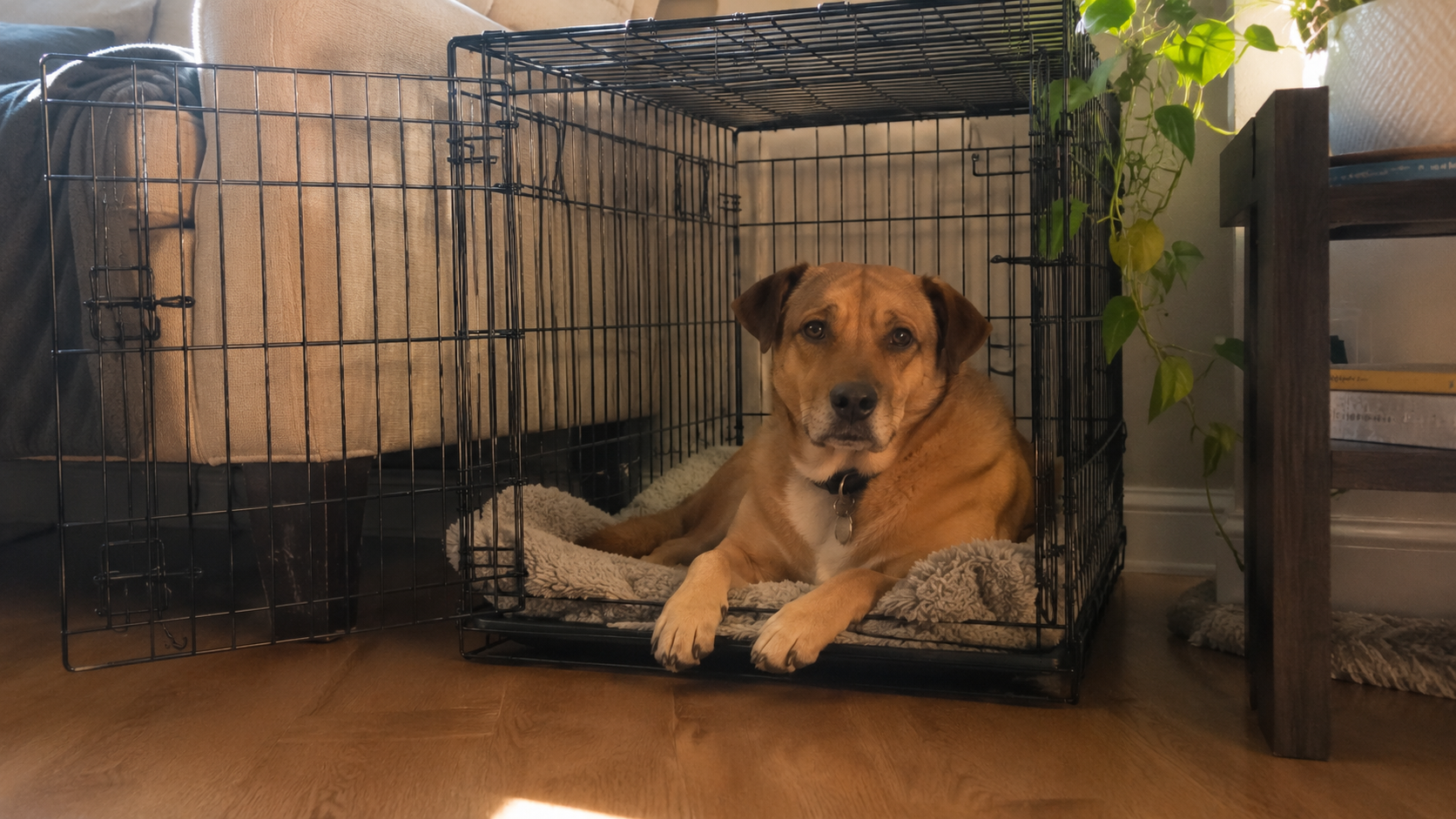
Step 4: Wait for them to choose it (week 1–3). The milestone that matters is your dog lying down inside voluntarily, without food. Some rescues get here in three days, some in three weeks. Do not rush it.
Step 5: Close the door briefly (only after step 4). Close it for two seconds while they’re eating, then open it. Build up in tiny increments, staying in the room. If your dog stiffens, stares at the door, or stops eating, you’ve gone too fast.
Step 6: Add distance, then time. Step away, come back before they get worried. Then leave the room briefly. Then longer. Keep departures and returns completely undramatic.
Step 7: Real absences. Short errands first, building gradually. Leave a safe long-lasting chew, and don’t make a ceremony of leaving.
Protest vs genuine panic: know the difference
This is the most important judgment call, and it’s where well-meaning owners do real harm by “letting them cry it out.”
Protest looks like: a bit of whining or a bark, then settling within a few minutes. This is normal and fine to wait out.
Genuine panic looks like:
- Frantic scrabbling at the door or bars
- Heavy drooling, panting, or trembling
- Bent bars, broken teeth, or bloodied paws and nose
- Urinating or defecating in the crate despite being house-trained
- Escalating rather than settling over time
- Distress that starts the moment you pick up your keys
Panic is not something to push through. It often indicates separation anxiety or a bad crate history, and forcing it makes the association worse. Stop, go back several steps, and speak to your vet or a qualified reward-based behaviorist. Separation anxiety is a treatable condition, but it needs a proper plan, not more crate time.
Some rescue dogs should not be crated
A minority of rescues have such strong negative associations that crating is genuinely cruel and can cause injury. That’s not a training failure. A dog-proofed room with a baby gate, an exercise pen, or simply free run of a safe space achieves the same safety without the fear. The crate is a means, not the goal.
Mistakes that set rescues back
- Closing the door too early. By far the most common error, and the hardest to undo.
- Using the crate as punishment. One angry “get in there” can poison weeks of patient work.
- Too much crate time. A crate is a bedroom, not storage. Adult dogs shouldn’t be crated more than about 4 hours at a stretch during the day.
- Letting them out mid-panic. Where possible, wait for a brief pause before opening, so you don’t teach that panicking works. But if a dog is genuinely distressed, safety comes first — let them out and go back a step.
- Expecting puppy timelines. A rescue may need weeks where a puppy needs days. That’s not failure, it’s history.
What about overnight?
Nights are easier than most people expect, provided the daytime work is done:
- Put the crate in your bedroom at first. Proximity settles most dogs faster than anything else.
- Tire them out, then toilet, then bed, in that order.
- Cover part of the crate with a blanket so it feels enclosed.
- Expect some restlessness for the first few nights in a new home, crate or no crate. That’s adjustment, not crate refusal.
If you’re also housetraining an adult rescue, our potty training guide has a section on adult dogs, who typically learn faster than puppies because they can physically hold on.
For the standard puppy version of this process, see our full crate training guide. And if your rescue is young enough to still be mouthing, our guide to when puppies stop biting explains what’s teething and what’s habit.
Frequently asked questions
How long does it take to crate train a rescue dog?+
Anywhere from a few days to several weeks, depending on the dog's history. A rescue with no crate experience often adapts within a week. One with a bad crate association may need three or more weeks of patient, door-open work. Go by the dog's comfort rather than a schedule, and never close the door until they settle inside voluntarily.
Should I crate my rescue dog at night?+
You can, and many rescues sleep better in a den-like space. Start with the crate in your bedroom, since proximity is reassuring in a new home. If your dog is calm and house-trained, a dog bed in your room works just as well. The crate is optional, not obligatory.
My rescue dog panics in the crate. What do I do?+
Stop crating and go back several steps. Frantic scrabbling, heavy drooling, trembling, injury, or soiling the crate are signs of genuine panic rather than protest, and often indicate separation anxiety or a bad history. Pushing through makes it worse. Speak to your vet or a qualified reward-based behaviorist, and use a dog-proofed room or pen in the meantime.
Can you crate train an older dog?+
Yes. Adult and senior dogs can absolutely learn to love a crate, and they often progress faster than puppies once they're comfortable, because they have better bladder control and calmer energy. The difference is emotional, not cognitive: an older dog may have prior associations to work through, so the early door-open stages matter more.
How long can a rescue dog stay in a crate?+
For a healthy adult dog, no more than about four hours at a time during the day, plus overnight, which is different because sleeping slows their system. If you need longer coverage, use a puppy-proofed room, an exercise pen, or arrange a midday visit. A crate should be a resting place, not where the dog spends most of its life.
The bottom line
Crate training a rescue is mostly an exercise in patience. Set the crate up and ignore it, let good things quietly happen inside it, feed every meal there, and wait for your dog to choose it before you ever touch the door. Watch carefully for the difference between mild protest and real panic, and be willing to abandon the crate entirely if your dog tells you it isn’t right for them.
Done at their pace, most rescues end up napping in there with the door wide open, which is the whole point.
Sources & further reading
This article draws on guidance from these trusted organizations. Always consult your own veterinarian for advice specific to your pet.
Written by
Raghav DeedwaniyaFounder & Editor
Raghav Deedwaniya is the founder and editor of Petifys, and the author behind its pet care content. I’m a lifelong pet owner, not a veterinarian — I’ve been around dogs since childhood, and that hands-on experience is what got me into writing about responsible pet ownership. At Petifys I create practical, easy-to-understand guides, each one carefully researched using trusted sources such as the AVMA, ASPCA and International Cat Care. My aim is to help you make informed everyday decisions — but for anything involving your pet’s health, always consult a qualified veterinarian who can examine your animal in person.
Disclosure: Some links in this article are affiliate links. If you buy through them we may earn a small commission at no extra cost to you. We only recommend products we believe in. Learn more.