Puppy Feeding Schedule by Age (With Chart)
A clear puppy feeding schedule by age — how many meals a day from 8 weeks to 12 months, portion tips, and when to switch to adult dog food. Free chart.
On this page
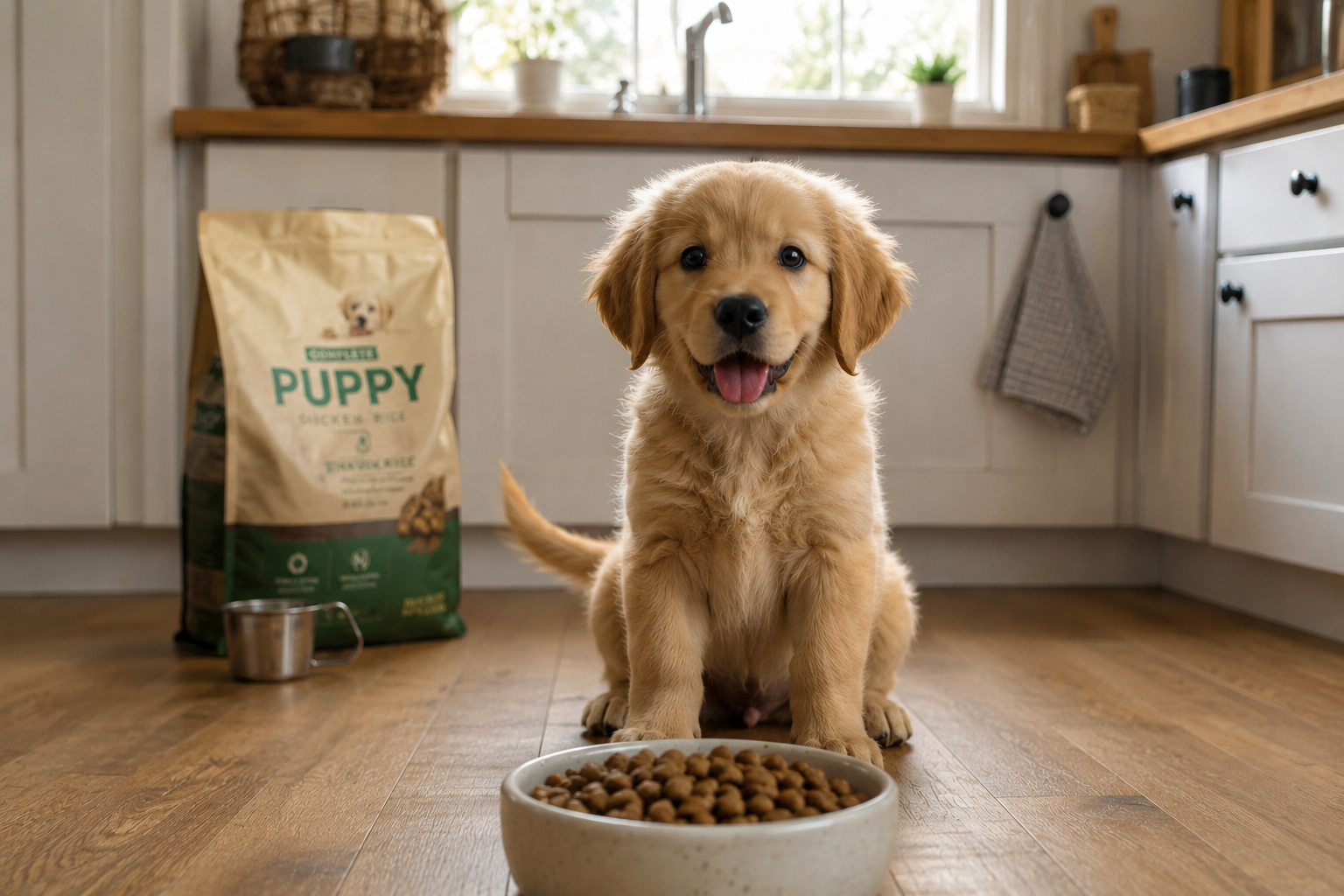
Bringing home a puppy comes with a hundred tiny questions, and “how often do I actually feed this thing?” is one of the first. Feed too little and you stunt a growing body; feed too much (or free-pour a bowl) and you set up a chubby, joint-stressing start to life. But the schedule itself is refreshingly simple, and it changes in clear stages as your puppy grows.
Here’s the whole thing, age by age, with a chart you can screenshot and stick on the fridge.
The short version
Puppies eat more often than adult dogs because their stomachs are tiny and they’re growing fast. Start at 4 meals a day, drop to 3, then settle at 2 meals a day for life. Always feed a food labelled for “puppies” or “all life stages” until they’re grown.
The puppy feeding chart
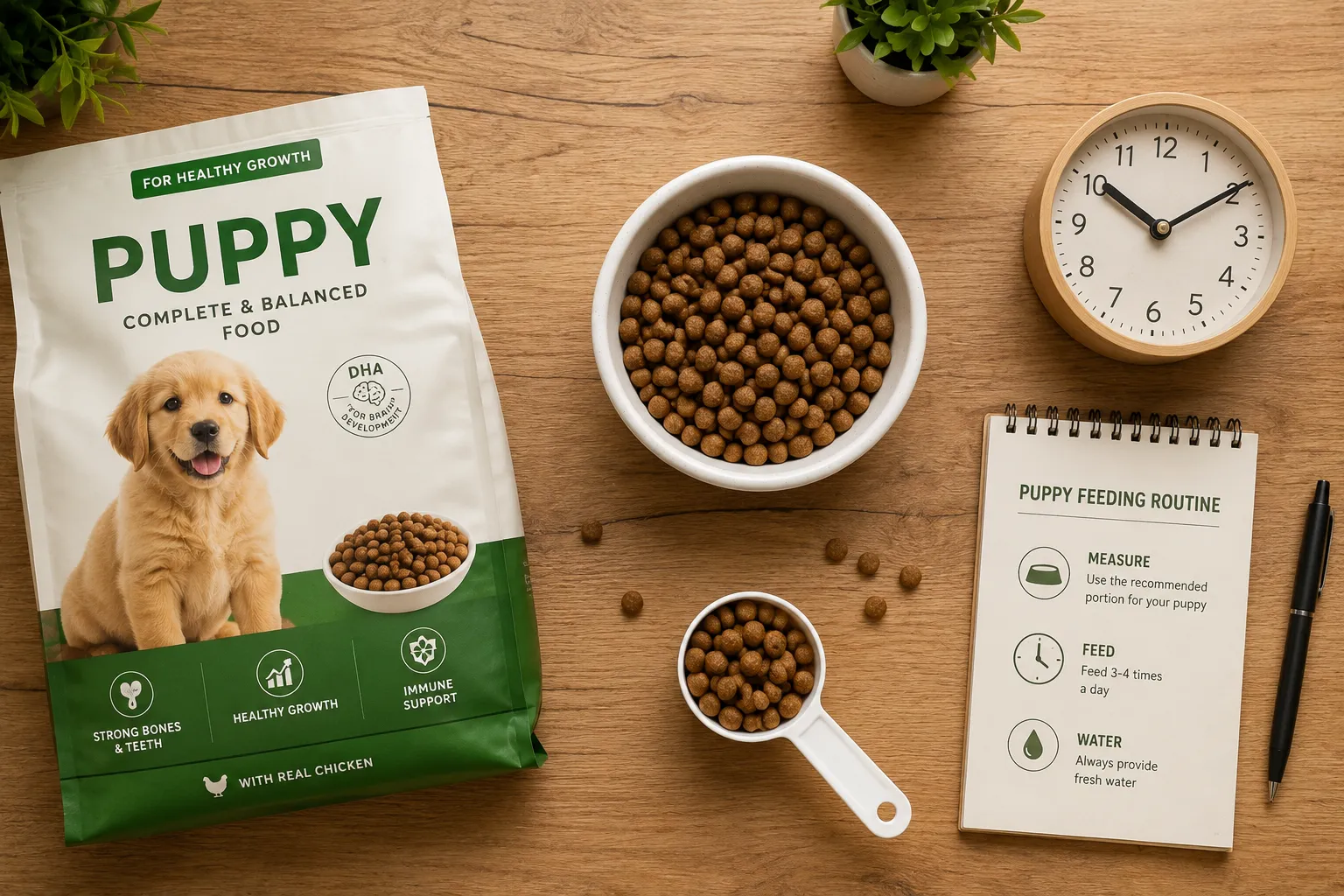
This is the standard rhythm used in mainstream veterinary feeding guidance (sources below). Larger breeds tend to shift stages a little later, and your bag’s guidance plus your vet’s advice always win over a generic chart.
| Puppy age | Meals per day | What’s happening |
|---|---|---|
| 6–12 weeks | 4 meals | Tiny tummy, huge growth — little and often |
| 3–6 months | 3 meals | Growing fast; losing that puppy-belly roundness |
| 6–12 months | 2 meals | Growth slowing; settling into the adult routine |
| 12+ months* | 2 meals | Adult schedule for life (large breeds: 12–24 months) |
* Small breeds mature around 12 months; large and giant breeds keep growing until 18–24 months and should stay on puppy food that whole time. When in doubt, ask your vet.
Age by age: what to actually do
6–12 weeks — four small meals. Your puppy’s stomach is barely bigger than a walnut, so spread food across four meals to keep energy and blood sugar steady (tiny breeds especially can crash if they go too long without eating). Most puppies come home around 8 weeks already weaned onto solid puppy food — keep them on the same brand the breeder or shelter used for the first week or so to avoid a tummy upset, then switch gradually if you want to.
3–6 months — down to three meals. As the digestive system matures you can drop the midday-ish meal and settle into breakfast, lunch and dinner. This is peak growth and peak chaos: you’ll notice the round puppy belly slimming and the appetite staying enormous.
6–12 months — down to two meals. Growth is slowing, and most puppies move comfortably to a morning and evening meal — the schedule they’ll keep for the rest of their life. Keep feeding puppy food until they’ve finished growing (see the chart), then transition to adult food over about a week.
12 months and beyond — two meals for life. Twice a day suits the vast majority of adult dogs: it keeps them satisfied, supports steady digestion, and gives you two natural training and bonding moments a day.
Large-breed puppies: don't overfeed growth
Big-breed puppies (Labs, Shepherds, Danes and friends) should not be grown as fast as possible. Overfeeding and too many calories can cause joint and bone problems for life. Feed a large-breed puppy formula, follow portion guidance carefully, and keep them lean — your vet can confirm the right pace.
How much — not just how often
Meals-per-day is the easy part; portion size is where people go wrong. Three rules keep you honest:
- Start with the bag, not a guess. Every puppy food prints a feeding table by age and expected adult weight — that’s your daily total, which you then divide across the day’s meals. It’s a starting point, not gospel.
- Feed to body condition. Just like with adult dogs, you should be able to feel your puppy’s ribs with a light touch and see a slight waist from above. A visible ribcage means feed more; no waist and a round tum means feed a little less.
- Measure every meal. Use an actual measuring cup or scales, not the “looks about right” method. Small daily over-pours add up to a heavy dog fast.
And treats count. During training you’ll hand over a lot of them, so keep treats to around 10% of daily calories and use part of the actual meal kibble as training rewards — your puppy won’t know the difference.
Switch foods slowly, always
Changing brand or moving from puppy to adult food? Do it over 5–7 days, mixing a little more new food into the old each day. A sudden swap is a reliable recipe for an upset stomach and a very messy few days.
What times should you feed a puppy?
The exact clock times matter less than keeping them the same every day. What you want is even spacing, an early enough breakfast, and a last meal with a few hours of awake time before bed so they can toilet before lights-out.
Sensible default times:
- Four meals a day (6–12 weeks): 7am, 11am, 3pm, 7pm
- Three meals a day (3–6 months): 7am, 12pm, 5pm
- Two meals a day (6 months+): 7am and 6pm
Shift the whole block earlier or later to fit your day — a puppy does not care whether breakfast is at 6am or 8am, only that it happens at the same time each morning. Try to serve the last meal about three hours before bedtime, which gives their digestion time to finish and makes the final toilet trip much more productive.
Puppy feeding and potty schedule (combined)
Feeding at the same times every day isn’t just tidy — it’s a secret weapon, because what goes in on a schedule comes out on a schedule. Most puppies need to toilet within 5 to 30 minutes of eating, so a fixed feeding routine hands you a predictable toilet routine for free.
Here’s what a full day looks like for a roughly 3-month-old puppy on three meals:
| Time | What happens |
|---|---|
| 7:00am | Wake, straight outside to toilet |
| 7:15am | Breakfast, then outside again 15 minutes later |
| 8:00am–12:00pm | Play, short training, nap. Toilet trip every 1–2 hours and after every nap |
| 12:00pm | Lunch, then outside 15 minutes later |
| 1:00–5:00pm | Nap, play, a short walk. Toilet after each nap and play session |
| 5:00pm | Dinner, then outside 15 minutes later |
| 5:30–9:00pm | Calm evening, chew time, last drink about an hour before bed |
| 9:30pm | Final toilet trip, then crate for the night |
| ~2:00am | One night toilet trip for young puppies — calm and boring |
Adjust the meal count for your puppy’s age using the chart above. If you’re deep in the mopping phase right now, pair this with our 7-day potty training method and watch the accidents drop.
A steady routine also helps you spot trouble early: a puppy who suddenly goes off their food is telling you something, and you’ll only notice if “normal” is consistent in the first place.
When a skipped meal means call the vet
The odd fussy meal is usually nothing. But a young puppy who refuses food for more than about 12 hours, or skips meals alongside vomiting, diarrhea, lethargy or a bloated belly, needs a vet promptly — puppies have small reserves and can go downhill quickly. This is general guidance, not veterinary advice.
Wet, dry, or both?
For puppies, a complete, age-appropriate food matters far more than the format. Good-quality dry puppy food is convenient, affordable and helps keep teeth cleaner; wet puppy food is more tempting and hydrating and can help fussy eaters. Many owners do a mix — the key is that whatever you choose says “complete” and is formulated for puppies (or “all life stages”), so it has the extra protein, calories and calcium a growing body needs. Adult dog food simply doesn’t, which is why puppies shouldn’t eat it until they’re grown.
This is just one chapter of the bigger first-months story — our first-time puppy owner’s guide covers the whole picture, from vet visits and vaccinations to sleep, training and the teething and biting phase that arrives right on schedule.
Frequently asked questions
How many times a day should I feed my puppy?+
It changes with age: about 4 meals a day from 6–12 weeks, 3 meals from 3–6 months, and 2 meals a day from around 6 months onwards — which becomes their adult schedule for life. Puppies eat more often than adult dogs because their stomachs are small and they're growing fast.
How much should I feed my puppy?+
Start with the feeding table on your puppy food's packaging, which gives a daily amount based on age and expected adult weight, then divide it across the day's meals. Adjust to body condition — you should be able to feel the ribs easily and see a slight waist. Measure every meal rather than guessing, and count treats toward the daily total.
When should I switch my puppy to two meals a day?+
Most puppies move to two meals a day at around 6 months old, once growth begins to slow. This becomes their permanent adult routine. Some small breeds settle a little earlier; go by your puppy's appetite and your vet's advice rather than the calendar alone.
When can a puppy eat adult dog food?+
When they've finished growing — around 12 months for small and medium breeds, but 18–24 months for large and giant breeds, who should stay on large-breed puppy food that whole time. Switch gradually over 5–7 days. Puppy food has the extra calories, protein and calcium a growing body needs, which adult food lacks.
Should I feed my puppy wet or dry food?+
Either works, as long as it's a complete food formulated for puppies or all life stages. Dry food is convenient and better for teeth; wet food is more hydrating and tempting for fussy eaters. Many owners mix the two. The format matters far less than choosing a quality, age-appropriate puppy food and feeding the right amount.
What is the feeding schedule for a 12 week old puppy?+
Twelve weeks is right at the changeover point. Many puppies are still on four meals a day at 12 weeks, and most move to three meals somewhere between 12 and 16 weeks. A typical three-meal day is breakfast at 7am, lunch at midday and dinner at 5pm. Go by appetite and your vet's advice rather than the calendar alone, and drop a meal only when your puppy is consistently leaving food.
What time should I feed my puppy?+
Keep the times consistent rather than chasing exact hours. Common patterns are 7am/11am/3pm/7pm for four meals, 7am/12pm/5pm for three, and 7am/6pm for two. Aim to serve the last meal about three hours before bedtime so digestion finishes and the final toilet trip is productive.
How long after eating does a puppy need to poop?+
Usually within 5 to 30 minutes of finishing a meal, which is exactly why a fixed feeding schedule makes house-training so much easier. Take your puppy straight out after every meal, and again after naps and play sessions.
The bottom line
Feeding a puppy is mostly about rhythm: four meals, then three, then two, tapering as they grow, on a food made for puppies until they’re fully grown. Portion from the bag, feed to the ribs-and-waist test, measure everything, and switch foods slowly. Nail the schedule and you get two bonuses for free — easier house-training and an early-warning system for illness. Stick it on the fridge, and you can stop second-guessing the scoop.
Sources & further reading
This article draws on guidance from these trusted organizations. Always consult your own veterinarian for advice specific to your pet.
Written by
Raghav DeedwaniyaFounder & Editor
Raghav Deedwaniya is the founder and editor of Petifys, and the author behind its pet care content. I’m a lifelong pet owner, not a veterinarian — I’ve been around dogs since childhood, and that hands-on experience is what got me into writing about responsible pet ownership. At Petifys I create practical, easy-to-understand guides, each one carefully researched using trusted sources such as the AVMA, ASPCA and International Cat Care. My aim is to help you make informed everyday decisions — but for anything involving your pet’s health, always consult a qualified veterinarian who can examine your animal in person.
Disclosure: Some links in this article are affiliate links. If you buy through them we may earn a small commission at no extra cost to you. We only recommend products we believe in. Learn more.