Why Is My Cat Not Using the Litter Box?
Cat peeing outside the litter box? The real reasons — dirty box, wrong litter, stress or illness — plus a step-by-step fix and exactly when to call the vet.
On this page
First, breathe. A cat weeing on your rug is genuinely stressful — but your cat isn’t doing it to spite you, and cats don’t “do things for revenge.” That’s a human story we tell about an animal that’s actually trying to communicate. When a cat stops using the litter box, they’re almost always saying one of three things: something hurts, something about the box is wrong, or I’m stressed.
Your job is to work out which. This guide walks you through it in order, from the most urgent cause to the easiest fix.
Read this before anything else
If your cat is straining, going in and out of the box constantly, crying when they wee, weeing tiny amounts, or you see blood — treat it as an emergency and call a vet today, especially with male cats. A blocked bladder can become life-threatening within hours. This article is general guidance, not a substitute for veterinary care.
Rule out illness first — always
Here’s the mistake almost everyone makes: assuming it’s behavior and going straight to “how do I stop this?” But a sudden change in litter box habits is one of the most common early signs of a medical problem in cats — and no amount of retraining fixes a urinary tract infection, crystals, kidney issues, diabetes, or arthritis that makes climbing into the box hurt.
So the very first question isn’t “why is my cat being naughty?” It’s “is my cat unwell?” Signs that point to a vet trip, not a training fix:
- It started suddenly in a previously reliable cat
- Straining, frequent trips, or crying in the box
- Blood in the urine, or weeing in tiny amounts
- Drinking much more or less than usual
- An older cat who’s stopped jumping up or seems stiff (arthritis makes a high-sided box genuinely painful)
If any of these ring true, book the vet before you read the rest. Everything below assumes your cat has a clean bill of health.
The box itself: the #1 behavioral cause
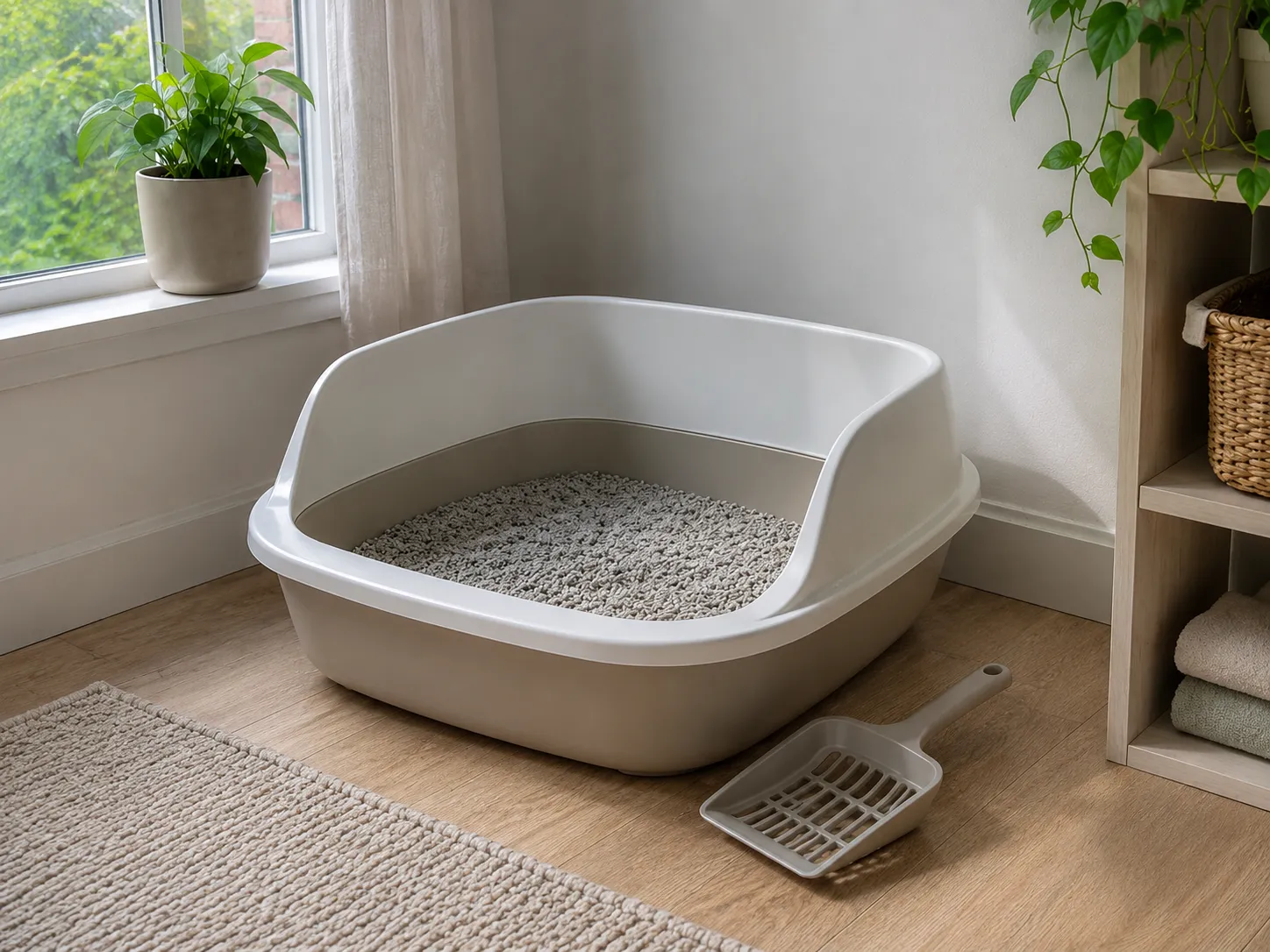
If the vet gives the all-clear, the box is where 90% of cases hide. Cats are fastidious, and their standards are higher than ours. Run through this checklist honestly:
- Is it clean enough? A cat’s sense of smell is around 14 times sharper than yours. A box that seems “fine” to you can be revolting to them. Scoop at least once a day — twice is better — and do a full litter change and wash weekly.
- Is the litter right? Most cats prefer unscented, fine, soft-textured clumping litter. Those floral “fresh linen” scents are made for human noses and actively repel a lot of cats. If you recently switched brands, that’s a prime suspect — our guide to the best cat litter for odor control covers what actually keeps smells down without the perfumes cats hate.
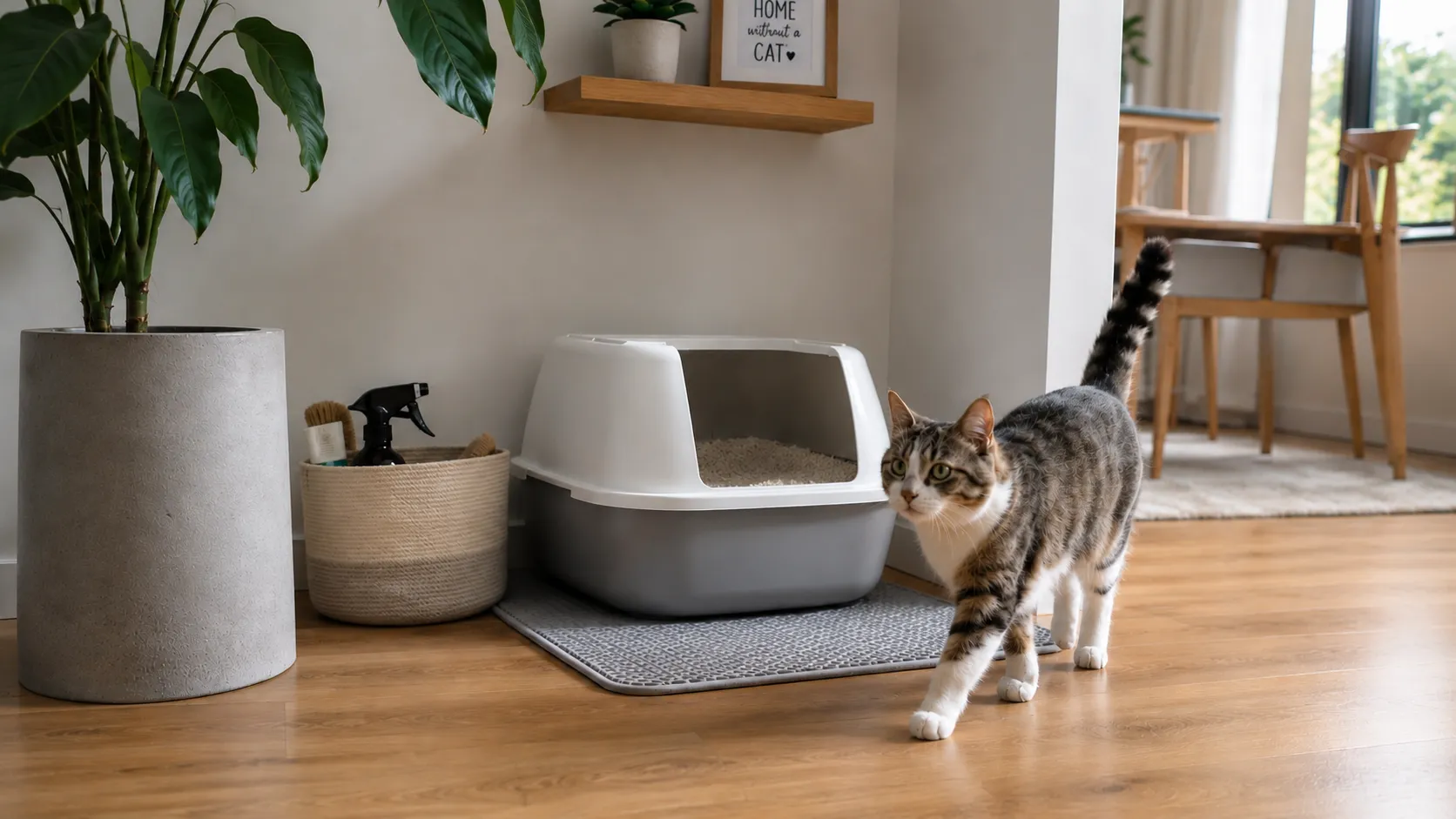
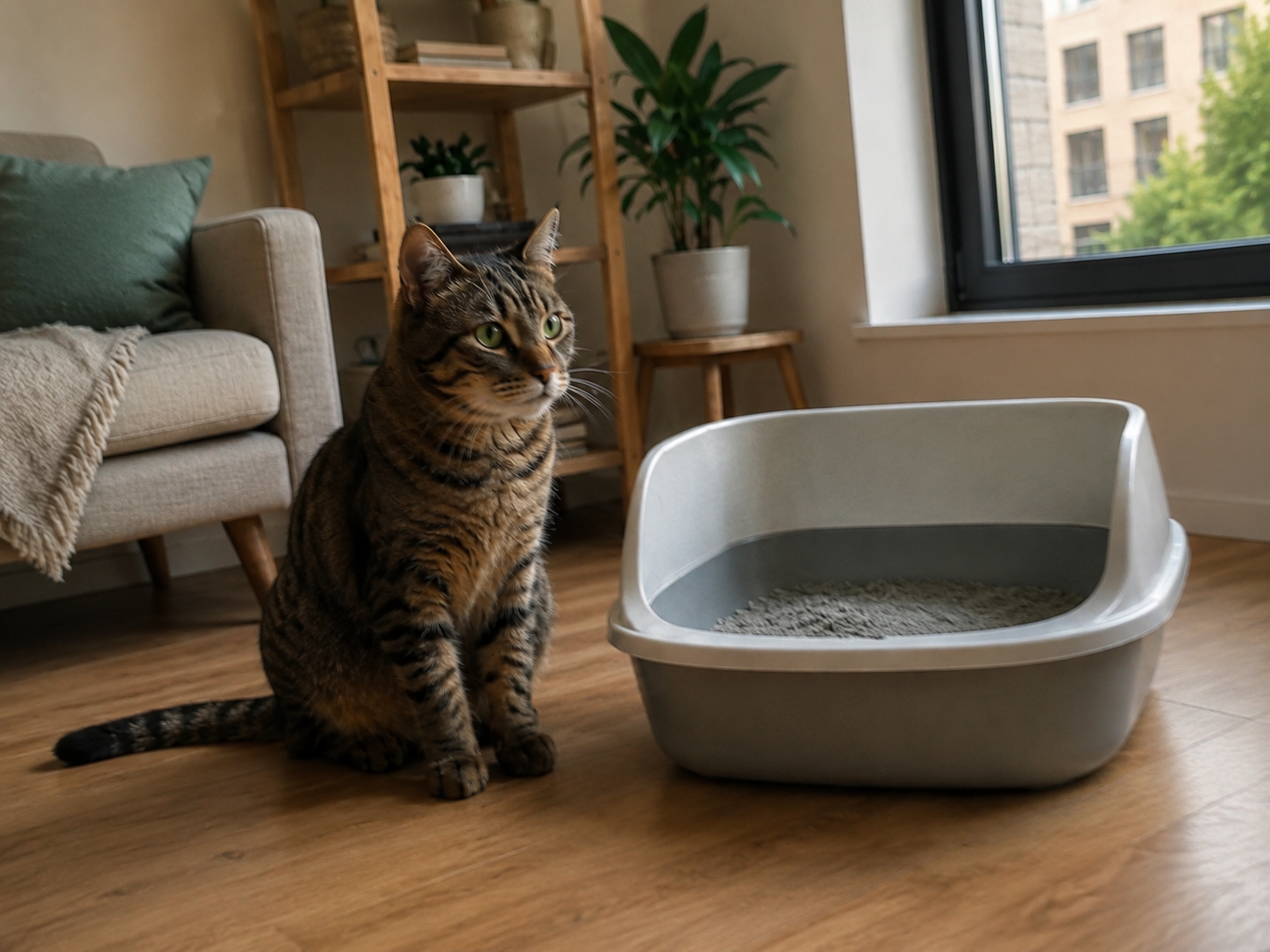
- Is the box big enough? It should be about 1.5× your cat’s body length. Most shop-bought boxes are too small. Bigger is almost always better.
- Covered or uncovered? Hoods trap odor (great for you, grim for the cat) and can make a cat feel trapped. Many cats prefer an open box — try removing the lid.
- How many boxes? The golden rule is one box per cat, plus one. Two cats = three boxes. One cat = two. Cats often want a “wee box” and a separate “poo box,” and they hate queuing.
Location, location, location
Even a spotless box in the wrong spot gets boycotted. Put yourself in your cat’s paws:
- Not next to food and water. No animal wants to toilet where it eats. This one trips up so many owners.
- Quiet and low-traffic. A box beside a rumbling washing machine, in a busy hallway, or somewhere the dog/kids ambush them will get avoided. Cats want to feel safe and unwatched while vulnerable.
- Easy to reach and escape. Two exits mean a nervous cat never feels cornered — important in multi-cat homes where one cat can “guard” a box.
- One per floor in a multi-storey home. Expecting a kitten or a senior cat to sprint downstairs in time is optimistic.
Stress: the invisible trigger
Cats are creatures of habit, and “inappropriate weeing” is one of the first ways stress leaks out. Ask what’s changed in your cat’s world recently:
- A new pet, baby, partner or flatmate
- Moving house, or even rearranging furniture
- A new cat visible outside the window (a huge, underrated stressor)
- Changes in your schedule, building work, or new smells
- Tension with another cat in the home
Stress-weeing is often spraying — small amounts on vertical surfaces, tail quivering — rather than emptying the bladder in a squat. The fix is to lower the overall stress: keep routines steady, add vertical space and hiding spots, use calming pheromone diffusers, and give each cat their own resources (boxes, bowls, beds) so nobody has to compete.
The enzyme cleaner rule
Wherever your cat has gone, clean it with an enzyme cleaner, never a normal household one. Ordinary cleaners (and especially anything with ammonia or bleach) leave a scent your cat still reads as “toilet here,” so they return to the same spot. Enzyme cleaners break the smell down completely — this single step ends a huge number of repeat-offence cases.
“My cat suddenly stopped using the litter box”
A cat who used the box reliably for years and then stops is telling you something changed. That word — suddenly — is the most useful diagnostic clue you have, and it shifts the order in which you should investigate.
Sudden change in a previously reliable cat = suspect health first. This is different from a cat who never took to the box in the first place, where setup is usually the culprit. Book a vet appointment before you start rearranging furniture, especially if you see straining, frequent trips, crying, blood, or weeing in small amounts.
If the vet finds nothing, ask what changed in the same window:
- A new litter brand, a new box, or a box moved to a different room
- A new pet, baby, partner, flatmate or house guest
- Building work, a house move, or new furniture
- A neighborhood cat appearing at the window
- A change to your working hours, so the cat is alone more
Cats connect events to places. Something startling that happened near the box (a washing machine spin cycle, a dog barking, a child jumping out) can be enough to make the box itself feel unsafe, even though nothing about the box changed.
Peeing outside the box but pooping in it (or the reverse)
This specific pattern is common and genuinely informative:
- Peeing outside, pooping inside often points to a urinary problem, or to the box feeling too small or too dirty for the longer time weeing takes. It’s also the classic pattern for stress-related spraying, which looks different from squatting: small amounts on a vertical surface, tail upright and quivering.
- Pooping outside, peeing inside more often means the box is too small to turn around comfortably, not clean enough, or that a painful experience (like constipation) got associated with the box.
- Either way, add a second box. Many cats simply prefer to separate the two jobs, and the one-box-per-cat-plus-one rule exists precisely because of this.
Your step-by-step fix-it plan
Work through it in this order and you’ll solve the large majority of cases:
- Vet check first to rule out illness. Non-negotiable.
- Scoop daily, wash weekly. Get the box scrupulously clean and keep it that way.
- Switch to unscented, fine clumping litter if you aren’t already.
- Add a box (remember: one per cat, plus one) and try an uncovered, larger one.
- Move boxes to quiet spots, away from food, ideally one per floor.
- Clean every accident with enzyme cleaner so old scent stops luring them back.
- Reduce stress — routine, hiding spots, vertical space, pheromone diffusers, and separate resources in multi-cat homes.
- Give it two weeks. Change one thing at a time so you know what worked, and don’t expect an overnight cure.
If you’ve done all of this properly and the problem persists, go back to the vet and ask about a referral to a feline behaviorist — some cases (especially long-standing spraying) need tailored help.
New to cats and feeling out of your depth? A lot of litter drama comes from a shaky start, and our first-time cat owner’s guide sets the whole foundation. If you’ve got a kitten specifically, our step-by-step guide to litter training a kitten gets the habit right from day one.
Frequently asked questions
Why is my cat suddenly peeing outside the litter box?+
A sudden change is a red flag for a medical issue — urinary tract infections, crystals, kidney disease and arthritis all commonly show up first as litter box avoidance. See a vet before assuming it's behavioral. Once illness is ruled out, the usual causes are a dirty box, a recent litter change, box location, or a new source of stress.
Do cats pee outside the box for revenge or attention?+
No — this is a myth. Cats don't act out of spite. Weeing outside the box is a signal of a problem: pain, an unacceptable box, or stress. Treating it as 'naughtiness' and punishing the cat makes things worse by adding fear and stress on top of the original cause.
How do I get my cat to use the litter box again?+
Rule out illness with a vet first, then reset the setup: scoop daily and wash weekly, switch to unscented fine clumping litter, provide one box per cat plus one (large and uncovered), place them in quiet spots away from food, clean all accidents with an enzyme cleaner, and reduce any stress. Change one thing at a time and give it about two weeks.
Can a dirty litter box cause a cat to pee elsewhere?+
Absolutely — it's one of the most common causes. A cat's nose is far more sensitive than a human's, so a box that smells only slightly off to you can be unusable to them. Scooping at least once daily and doing a full change weekly solves many cases on its own.
When should I see a vet about litter box problems?+
Immediately if your cat is straining, crying, going frequently, passing blood, or weeing only tiny amounts — a urinary blockage is an emergency, especially in male cats. Also see a vet for any sudden change in a previously reliable cat, or if a healthy-seeming cat keeps avoiding the box despite a clean, well-placed setup.
The bottom line
A cat missing the litter box is never random and never spiteful — it’s a message. Read it in order: health first, then the box (clean, big, unscented, uncovered, enough of them), then the location, then stress. Fix the cause instead of punishing the symptom, clean every accident with an enzyme cleaner, and give the changes a fortnight to land. Most cats go straight back to their tidy, private, instinctive selves — which is exactly where they’d rather be.
Sources & further reading
This article draws on guidance from these trusted organizations. Always consult your own veterinarian for advice specific to your pet.
Written by
Raghav DeedwaniyaFounder & Editor
Raghav Deedwaniya is the founder and editor of Petifys, and the author behind its pet care content. I’m a lifelong pet owner, not a veterinarian — I’ve been around dogs since childhood, and that hands-on experience is what got me into writing about responsible pet ownership. At Petifys I create practical, easy-to-understand guides, each one carefully researched using trusted sources such as the AVMA, ASPCA and International Cat Care. My aim is to help you make informed everyday decisions — but for anything involving your pet’s health, always consult a qualified veterinarian who can examine your animal in person.
Disclosure: Some links in this article are affiliate links. If you buy through them we may earn a small commission at no extra cost to you. We only recommend products we believe in. Learn more.