Best Cat Litter for Odor Control in 2026
Tired of the litter box smell? We compare the best odor-control cat litters — clumping clay, crystal and natural — with honest picks for every budget and home.
On this page
- Why litter boxes smell (and why perfume isn’t the fix)
- How we chose these litters
- Our picks
- Best overall: unscented clumping clay
- Best low-maintenance: silica crystals
- If you want the strongest fragranced option: lightweight crystals
- What about natural, plant-based litters?
- Comparison at a glance
- Best litter for your specific situation
- The 90-second routine that makes any litter work
- The bottom line
Let’s be honest about why you’re here: your home has started announcing that you own a cat, and you’d like it to stop. The good news: litter box smell is a solved problem. The catch is that the solution is only half about which litter you buy. The other half is setup and scooping habits, and no premium litter can out-perform a neglected box.
We’ll give you both halves: the litters that genuinely control odor, and the 90-second routine that makes any of them work.
Quick answer
For most homes, an unscented clumping clay litter is the odor-control sweet spot — daily clumping removes the smell at its source instead of perfuming over it (carbon-enhanced formulas help further). Crystal litter is the low-maintenance runner-up; plant-based litters are the eco-friendlier choice.
Why litter boxes smell (and why perfume isn’t the fix)
Litter smell is chemistry: bacteria breaking down urine into ammonia. You beat it three ways — clumping (remove the source fast), adsorption (activated carbon/charcoal trapping odor molecules), and moisture control (silica crystals drying waste out). Fragrance does none of these; it just layers “lavender” on top of ammonia — and many cats dislike perfumed litter enough to boycott the box entirely, which is how a smell problem becomes a cat that stops using the litter box altogether.
How we chose these litters
We’re a small independent site, so let’s be transparent about method: these picks are based on research, not a lab. We compared odor-control mechanism (clumping speed, carbon content, moisture absorption), dust levels, tracking, weight, and the balance of thousands of long-term owner reviews — then cross-checked the guidance against International Cat Care’s litter recommendations. Where a product has a genuine weakness, we say so. We earn a commission if you buy through our links, but that never changes which litters make the list.
Our picks
Best overall: unscented clumping clay

Dr. Elsey's Ultra Unscented Clumping Clay Cat Litter, 40 lb. Bag
- ✓Rock-hard clumps lift the odor source out cleanly
- ✓Completely unscented — nothing for a cat to reject
- ✓Fine-grained and low dust, kind to sensitive paws
- ✓Excellent value per pound
- ✕A 40 lb bag is heavy and awkward to pour
- ✕Clay is mined, so it's not the eco choice
- ✕Tracks more than crystal litter
We may earn a commission if you buy through this link, at no extra cost to you.
Unscented clumping clay is the default recommendation for a reason: hard clumps let you lift the odor source out every day, before bacteria turn it into ammonia. Fine-grained, fragrance-free litter is also the texture most cats accept without argument. If you have several cats, look for the multi-cat version of whichever clay you choose.
Best low-maintenance: silica crystals
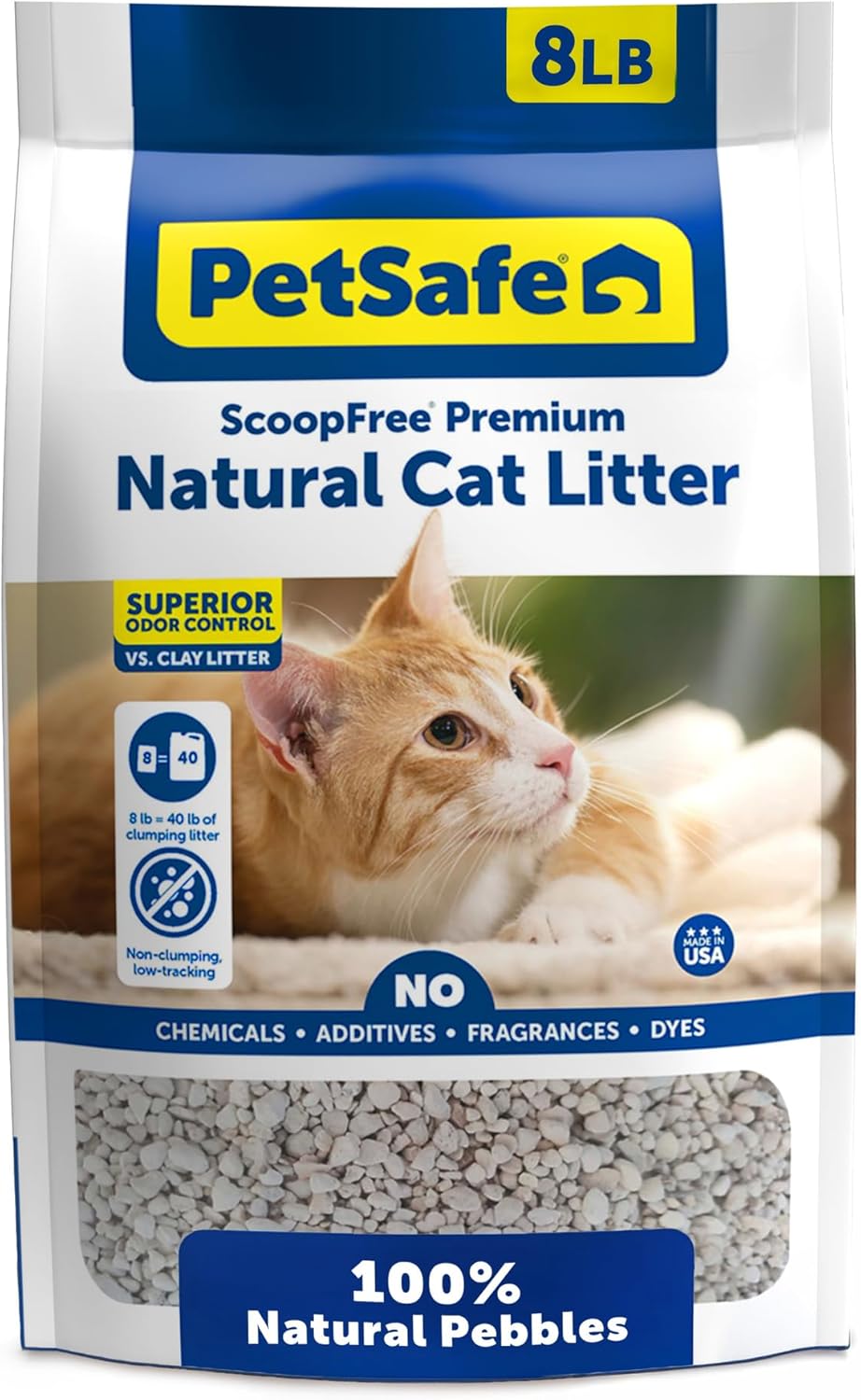
PetSafe ScoopFree Non-Clumping Crystal Cat Litter, No Fragrances, 8 lb. Bag
- ✓Outstanding moisture absorption dries waste out
- ✓Very low dust and tracking
- ✓Fragrance-free
- ✓One bag lasts weeks for a single cat
- ✕Doesn't clump — solids need removing daily
- ✕Some cats dislike the crunchy crystal texture
- ✕Mixed owner reviews compared with our top pick
- ✕Silica isn't biodegradable
We may earn a commission if you buy through this link, at no extra cost to you.
Crystal litter works differently: instead of clumping, it absorbs urine and dries solids out, which keeps a box smell-free between full changes. The trade-off is that nothing clumps, so you still remove solids daily. Introduce it gradually, mixed with the old litter, because texture-sensitive cats may vote no.
If you want the strongest fragranced option: lightweight crystals

Fresh Step Clean Care Crystal Cat Litter with Febreze Freshness, Ammonia Block Technology, Low Dust, 8 lb. Bag, Pack of 2
- ✓Strong moisture and ammonia control
- ✓Lightweight 8 lb bags are easy to handle
- ✓Low dust
- ✓Two-pack lasts a long time
- ✕Febreze-scented — we recommend unscented for most cats
- ✕Doesn't clump, so solids need daily removal
- ✕The most expensive of our three picks
- ✕Silica isn't biodegradable
We may earn a commission if you buy through this link, at no extra cost to you.
An honest caveat on this one: as we said above, we generally recommend unscented litter, because perfume is for human noses and a fair number of cats avoid a scented box. But if you specifically want a fragranced crystal litter, this is the strongest performer we found — just buy one bag first and watch whether your cat still uses the box happily.
What about natural, plant-based litters?
Corn, walnut, wood and recycled-paper litters have improved a lot, and they’re the genuinely eco-friendlier category — lighter, renewable, and some are compostable or flushable (check your local rules, and never flush cat waste if you’re pregnant or near vulnerable waterways). Odor performance is usually a notch behind good clumping clay. We haven’t settled on a plant-based pick we’re confident enough to put our name to yet, so we’re not linking one here rather than recommending something we haven’t properly compared.
Comparison at a glance
| Dr. Elsey’s Ultra (clumping clay) | PetSafe ScoopFree (crystals) | Fresh Step Crystals + Febreze | |
|---|---|---|---|
| Odor control | ★★★★★ | ★★★★☆ | ★★★★☆ |
| Clumps? | Yes — hard clumps | No | No |
| Scooping effort | Daily, easy | Solids daily | Solids daily |
| Scent | Unscented | Unscented | Febreze-scented |
| Dust & tracking | Low dust, tracks a little | Very low | Low |
| Weight | Heavy (40 lb bag) | Light (8 lb) | Light (2 × 8 lb) |
| Eco-friendliness | Low — mined clay | Low — silica | Low — silica |
| Price | $20.99 | $15.96 | $49.84 |
Prices and formulas change — always double-check on the product page before buying.
Best litter for your specific situation
Odor control isn’t one-size-fits-all — the right pick shifts with your home and your cat:
Best for a studio or small apartment. In a small space with no room to hide the box away, airflow is your enemy and dust is your other one. Go for a low-dust unscented clumping clay (our top pick), keep the layer a full three inches deep, and scoop twice a day rather than once. If you have two cats in a studio, you still need two boxes — put the second in the bathroom and run an air-purifier nearby.
Best for senior cats. Older cats have stiffer joints and more sensitive noses. Choose a soft, fine-grained unscented clumping litter (easier on achy paws than coarse crystals) in a low-entry box, and skip anything perfumed. If a senior cat suddenly starts missing the box or the urine smells much stronger, treat it as a vet visit, not a litter problem — kidney and urinary issues are common with age.
Best for a multi-cat household. More cats means more ammonia and faster saturation. Use a multi-cat clumping clay formula, follow the one-box-per-cat- plus-one rule, and place boxes in different rooms so a nervous cat is never “guarded” away from one. A thin baking-soda base layer in each box helps.
Best for kittens. Skip crystals and anything clumping-and-scented for very young kittens (they taste-test everything). A plain, unscented clumping or natural litter in a low tray is safest while they learn — see our full kitten litter training guide.
The 90-second routine that makes any litter work
- Scoop once a day. Non-negotiable. This single habit is bigger than any brand choice — it removes the odor source before chemistry starts.
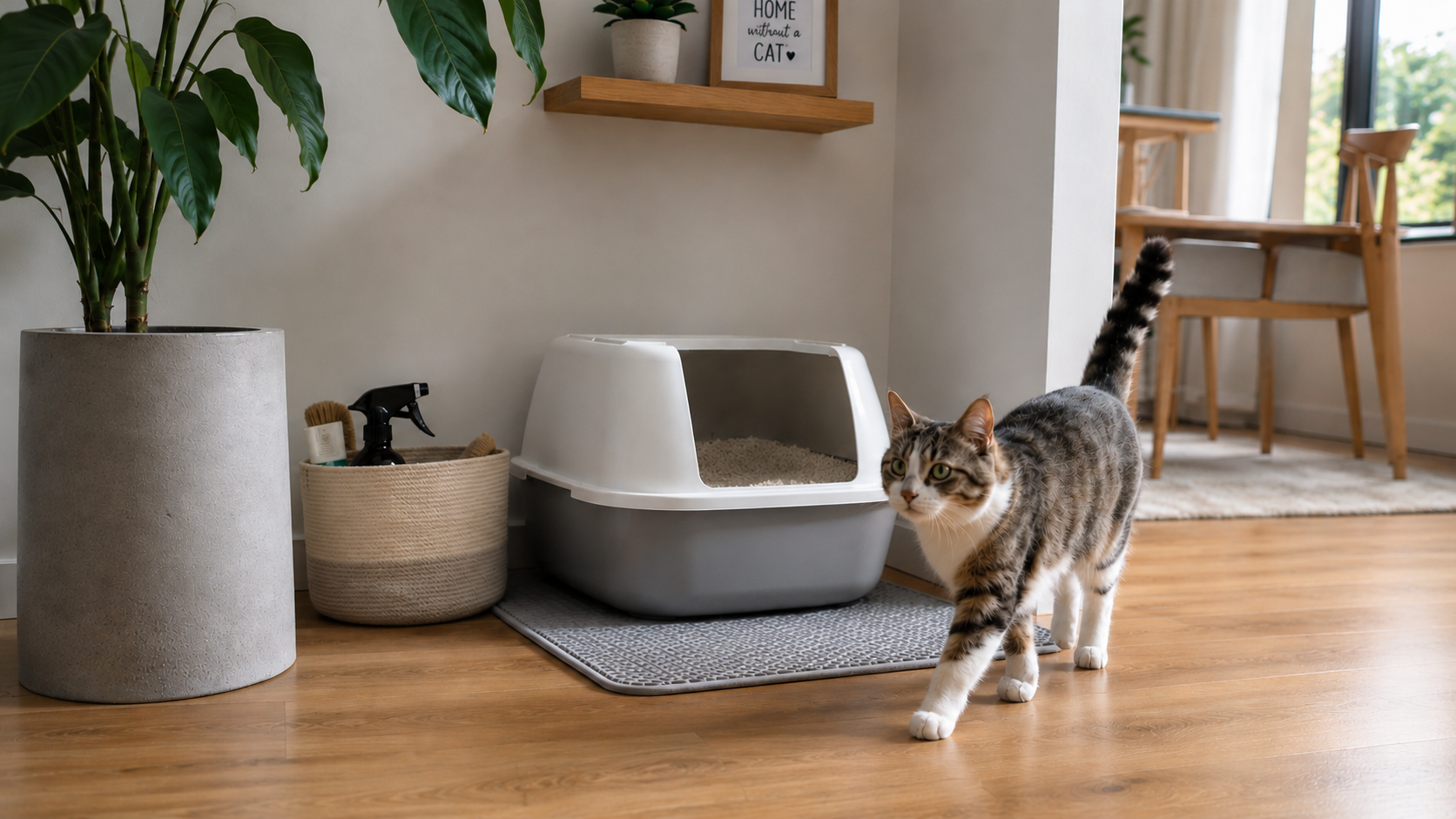
- Right depth: about 3 inches (7–8 cm). Too shallow = urine hits the pan and stinks; too deep = kicked-out litter everywhere.
- Full change + box wash every 1–2 weeks (mild soap, no bleach or citrus).
- A thin layer of baking soda under the litter is a free odor boost that won’t offend feline noses.
- One box per cat plus one, in ventilated spots — a box in an airless closet will smell with any litter. (Full setup logic is in our first-time cat owner’s guide.)
A sudden smell change is a health signal
If a well-maintained box suddenly smells much stronger — or your cat’s habits change — don’t just switch litters. Stronger urine odor, going more often, or missing the box can signal urinary problems that need a vet, not a new brand.
Frequently asked questions
What is the best cat litter for odor control?+
For most households, an unscented clumping clay litter with activated carbon offers the best odor control — it removes waste in hard clumps and chemically traps remaining odor. Crystal silica litter is the strongest low-maintenance alternative.
Is scented or unscented litter better for smell?+
Unscented, almost always. Fragrance masks odor for a few hours at best, and many cats actively avoid perfumed litter — which can cause accidents outside the box. Carbon or baking-soda based odor control works without a smell your cat hates.
How often should I change cat litter to prevent smell?+
Scoop clumps and solids daily, and do a full litter change with a box wash every 1–2 weeks for clumping litter (every 3–4 weeks for crystals). If you can smell the box within a day of changing it, the box itself may need replacing — plastic absorbs odor over years.
Does baking soda in cat litter really work?+
Yes, modestly. A thin layer of plain baking soda mixed into the base of the box neutralises acidic odor compounds and is completely cat-safe and unscented. It's a booster, though — not a substitute for daily scooping.
Why does my litter box still smell after cleaning?+
Usual causes: the plastic box has absorbed years of odor (replace boxes every 1–2 years), the box sits in an unventilated spot, there aren't enough boxes for the number of cats, or the litter layer is too shallow so urine pools at the bottom.
The bottom line
Buy an unscented clumping clay litter (or crystals if you value low maintenance, or a plant-based litter if you value the planet), pour it three inches deep, scoop for 90 seconds a day, and refresh the box weekly. Do that and the only way guests will know you have a cat is when it walks in and ignores them.
Sources & further reading
This article draws on guidance from these trusted organizations. Always consult your own veterinarian for advice specific to your pet.
Written by
Raghav DeedwaniyaFounder & Editor
Raghav Deedwaniya is the founder and editor of Petifys, and the author behind its pet care content. I’m a lifelong pet owner, not a veterinarian — I’ve been around dogs since childhood, and that hands-on experience is what got me into writing about responsible pet ownership. At Petifys I create practical, easy-to-understand guides, each one carefully researched using trusted sources such as the AVMA, ASPCA and International Cat Care. My aim is to help you make informed everyday decisions — but for anything involving your pet’s health, always consult a qualified veterinarian who can examine your animal in person.
Disclosure: Some links in this article are affiliate links. If you buy through them we may earn a small commission at no extra cost to you. We only recommend products we believe in. Learn more.