How to Take Care of a Hamster (Beginner's Guide)
Everything a new hamster owner needs: the right cage size, deep bedding, safe wheel size, what hamsters eat, taming tips, and the health signs to watch for.
On this page
Learning how to take care of a hamster is mostly a matter of unlearning what pet shops sell you. The standard starter kit, a small plastic cage with a tiny wheel and a bag of colorful muesli food, gets nearly every important thing wrong.
Real hamster care is simple, and cheaper than the kit: one hamster per cage, a much bigger enclosure, deep bedding to burrow in, and a wheel large enough that their back stays flat. Here is the whole thing.
The four rules, in one line
House hamsters alone, use the biggest enclosure you can fit, fill it with at least 6 inches of bedding for burrowing, and buy a wheel big enough that your hamster’s spine stays straight while running.
Can hamsters live together?
Almost always no, and this is the opposite of guinea pigs, which is why the advice gets muddled.
Syrian hamsters (the big golden ones) are strictly solitary. In the wild they live alone and defend a territory. Housed together, they will fight, often to the death, and usually not until they mature at around 8 to 10 weeks, which is why the pet shop pair “seemed fine”. One Syrian, one cage, always.
Dwarf hamsters (Roborovski, Campbell’s, winter white) sometimes tolerate same-sex siblings, but fights are still common and can be sudden and fatal. If you try it, you need a very large enclosure, two of every resource, and a genuine plan to separate them permanently. For a first-time owner, one hamster alone is the safe and kind choice.
A single hamster is not lonely. This is one of the rare cases where solitary is what the animal actually wants.
How big should a hamster cage be?
Bigger than almost anything sold as a hamster cage.
A widely used minimum is 450 square inches of unbroken floor space, and many welfare groups and experienced keepers now recommend 600 square inches or more, especially for Syrians. As with guinea pigs, floor area matters far more than levels or tubes.
Good options that hit those numbers cheaply:
- A large glass tank or aquarium (a 40-gallon breeder is a popular choice). Excellent for holding deep bedding.
- A bin cage, a large plastic storage tub with a mesh panel cut into the lid. Cheap and roomy.
- Purpose-built large hamster enclosures, if the floor measurements genuinely add up.
What to avoid: wire-floor levels (sore feet and broken legs), tall thin cages with narrow tubes (a Syrian can get stuck), and wire bar spacing wider than about 1 cm for dwarfs, who escape through remarkably small gaps. Hamsters are famous escape artists, so check the lid closes securely.
Skip the exercise ball. Hamsters have poor eyesight, balls offer no way to stop or rest, air flow is limited, and toes get caught in the vents. A big wheel plus a hamster-proofed playpen does the same job safely.
Bedding: the part everyone gets wrong
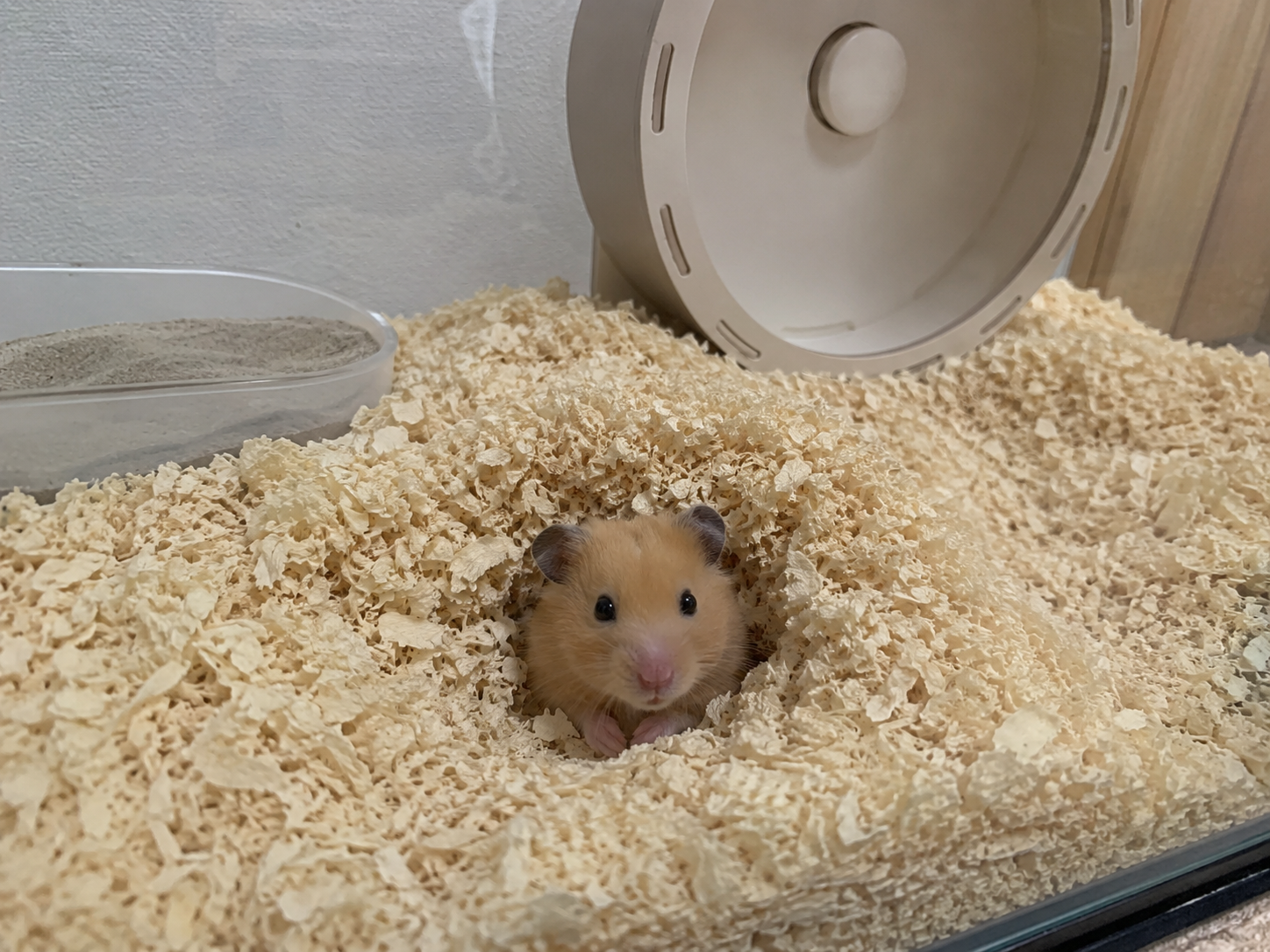
Hamsters are burrowing animals. In the wild they dig tunnel systems, and doing it is a genuine behavioral need, not a nice extra.
Give them at least 6 inches of bedding, deeper if you can, across most of the enclosure. Watching a hamster excavate an entire tunnel network overnight is easily the best part of owning one.
- Use paper-based bedding or kiln-dried aspen shavings. Plain, unscented toilet paper torn into strips makes great nesting material.
- Avoid cedar and pine shavings, whose oils can irritate airways, and avoid fluffy cotton-wool style “hamster fluff”, which does not break down and can wrap around limbs or block the gut if swallowed.
- Add a sand bath, a small dish of plain chinchilla sand (not dust). Hamsters groom by rolling in it. Never bathe a hamster in water.
Spot-clean soiled corners and refresh food daily, but resist stripping the whole enclosure often. A full clean every few weeks is plenty, and leaving some used bedding behind keeps their familiar scent, which is calming.
What do hamsters eat?
A good hamster diet is unfussy:
- A quality hamster pellet or a seed mix that is genuinely balanced, roughly one to two tablespoons a day. If you use a mix, watch for selective feeding, where they eat the sunflower seeds and leave the rest. Pellets prevent that.
- Small amounts of fresh vegetables most days: a little carrot, cucumber, broccoli, or leafy greens. Introduce new foods one at a time and remove uneaten fresh food daily so it does not rot in a hoard.
- Occasional protein, which surprises people. A little cooked plain egg or chicken, or a mealworm or two, is a genuinely good treat, particularly for dwarf hamsters.
- Fresh water at all times, from a bottle or a small shallow bowl.
- Scatter-feed sometimes. Sprinkling food into the bedding instead of a bowl makes them forage, which is excellent enrichment.
A note on hay: hamsters don’t need unlimited hay the way rabbits and guinea pigs do, because their teeth and digestion work differently. A little as nesting material is fine, but don’t build the diet around it — that’s a rabbit’s requirement, not a hamster’s.
Don't feed hamsters these
Chocolate, onion, garlic, raw potato, rhubarb, citrus, avocado, almonds, apple seeds, and anything sugary or sticky. Also skip the honey-coated seed sticks sold as treats. Dwarf hamsters are especially prone to diabetes, so keep sugary foods and dried fruit to a minimum for them.
The wheel: size genuinely matters
This is the most common accidental harm in hamster keeping. If the wheel is too small, the hamster’s spine curves upward as it runs, and over time that causes real back problems.
- Syrian hamsters need roughly a 10 to 11 inch wheel, minimum.
- Dwarf hamsters need about 8 inches, minimum.
- The running surface must be solid, not mesh or rungs, which trap feet.
- The back should look flat while running. If it curves up, the wheel is too small.
Wheels also need to be quiet, because your hamster will run several kilometres a night and you may regret putting the cage in your bedroom.
Taming and handling
Hamsters are nocturnal to crepuscular, meaning they are most active in the evening and at night. Work with that rather than against it.
- Never wake a sleeping hamster to handle it. A startled hamster bites, and who could blame it. Wait until it emerges on its own.
- Give it a week to settle in a new home before much handling.
- Start with food from your flat palm, resting your hand still in the enclosure so your scent becomes familiar.
- Scoop with two cupped hands, low over the bedding or your lap, so a sudden jump is a short drop. Never grab from above or squeeze.
- Keep sessions short, a few minutes at first, building slowly.
Hamsters that are handled gently and consistently usually become confident within a few weeks. Ones that are grabbed while sleeping usually do not.
Health basics and warning signs
Hamsters live around 2 to 3 years, which is short, and worth knowing before children get attached. Routine care:
- Watch the weight and the coat. A hunched posture or scruffy staring coat means something is wrong.
- Check teeth occasionally, and provide safe wood chews. Their teeth grow continuously.
- Keep the room between about 18 and 24°C (65 to 75°F). Below roughly 15°C a hamster can enter a hibernation-like torpor and look alarmingly dead while still being alive. Warm the room gradually and call a vet.
- Find a vet who sees small animals before you need one.
Call a vet the same day if your hamster...
Has watery diarrhea and a wet, matted tail area (known as wet tail, which is frequently fatal without fast treatment), stops eating or drinking, breathes noisily or with effort, has runny eyes or nose, develops a lump, drags its back legs, or is suddenly hunched, cold and unresponsive. This article is general guidance, not veterinary advice.
Are hamsters a good first pet?
They can be excellent, provided expectations match reality.
In their favour: low daily time commitment, no companion needed, they take up one enclosure, they are inexpensive to feed, and burrow-watching is genuinely fascinating.
Be realistic about: the nocturnal schedule (a hamster in a child’s bedroom will keep them awake, and will be asleep all day when they want to play), the short 2 to 3 year lifespan, and the fact that hamsters are more delicate to handle than a guinea pig or rabbit.
If you want a daytime, sociable pet you can cuddle more confidently, guinea pigs are the better fit. Our guinea pig care guide for beginners compares the workload honestly, and the rabbit care beginner’s guide covers the larger, longer-lived option.
Frequently asked questions
Can two hamsters live in the same cage?+
Syrian hamsters must always live alone, as they are territorial and will fight, often fatally, once they mature at around 8 to 10 weeks. Dwarf hamsters occasionally tolerate same-sex siblings but fights are common and can be sudden, so a single hamster per enclosure is the safe choice for beginners. A lone hamster is not lonely.
How big should a hamster cage be?+
Aim for a minimum of 450 square inches of unbroken floor space, with 600 square inches or more preferred, especially for Syrian hamsters. Most cages sold in pet shops fall well short. Large glass tanks and bin cages are affordable ways to hit those numbers, and floor area matters far more than extra levels or tubes.
What do hamsters eat?+
A balanced hamster pellet or a good seed mix, roughly one to two tablespoons daily, plus small amounts of fresh vegetables and occasional protein such as a mealworm or a little plain cooked egg. Provide fresh water at all times. Avoid chocolate, onion, garlic, citrus, raw potato, avocado and sugary treats, and limit sugar for diabetes-prone dwarf hamsters.
How deep should hamster bedding be?+
At least 6 inches, and deeper if you can manage it, because burrowing is a real behavioral need rather than an optional extra. Use paper-based bedding or kiln-dried aspen. Avoid cedar and pine shavings, and avoid fluffy cotton-wool bedding, which can wrap around limbs or cause blockages if eaten.
What size wheel does a hamster need?+
Syrian hamsters need roughly a 10 to 11 inch wheel and dwarf hamsters about 8 inches, always with a solid running surface rather than mesh or rungs. The simplest test is to watch them run: their back should stay flat. If the spine curves upward, the wheel is too small and can cause long-term back problems.
How long do hamsters live?+
Usually 2 to 3 years. That short lifespan is worth discussing with children before adopting, and it is one of the main practical differences between hamsters and guinea pigs or rabbits, which live considerably longer.
The bottom line
Hamster care is easy once you ignore the starter kit: one hamster per enclosure, the biggest floor space you can fit, six inches or more of burrowable bedding, a big solid wheel, plain pellets with a little fresh veg, and a sand bath instead of a water bath. Handle gently, never wake them to play, and keep the room comfortably warm.
Do that and you get a couple of years of an animal that engineers elaborate tunnels every night and stuffs its cheeks with an implausible quantity of food.
Sources & further reading
This article draws on guidance from these trusted organizations. Always consult your own veterinarian for advice specific to your pet.
Written by
Raghav DeedwaniyaFounder & Editor
Raghav Deedwaniya is the founder and editor of Petifys, and the author behind its pet care content. I’m a lifelong pet owner, not a veterinarian — I’ve been around dogs since childhood, and that hands-on experience is what got me into writing about responsible pet ownership. At Petifys I create practical, easy-to-understand guides, each one carefully researched using trusted sources such as the AVMA, ASPCA and International Cat Care. My aim is to help you make informed everyday decisions — but for anything involving your pet’s health, always consult a qualified veterinarian who can examine your animal in person.
Disclosure: Some links in this article are affiliate links. If you buy through them we may earn a small commission at no extra cost to you. We only recommend products we believe in. Learn more.